SoC vs SoM vs SBC vs SMARC — what are the differences, and which embedded hardware architecture is right for your project?
When developing an industrial HMI, smart appliance, or embedded control system, choosing the right computing architecture can significantly affect development costs, hardware flexibility, time to market, and long-term product availability.
In this guide, we explain the differences between System on Chip (SoC), System on Module (SoM), Single Board Computer (SBC), and SMARC, and explore when a customized SBC may be a better choice than a traditional SoM + carrier board solution.
1. What Is an SoC (System on Chip)?
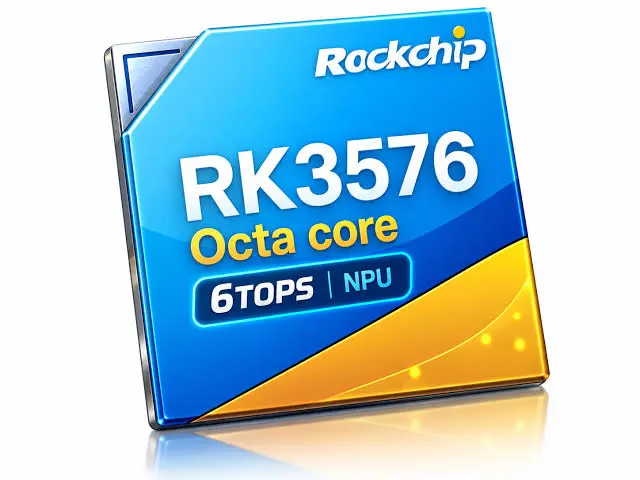
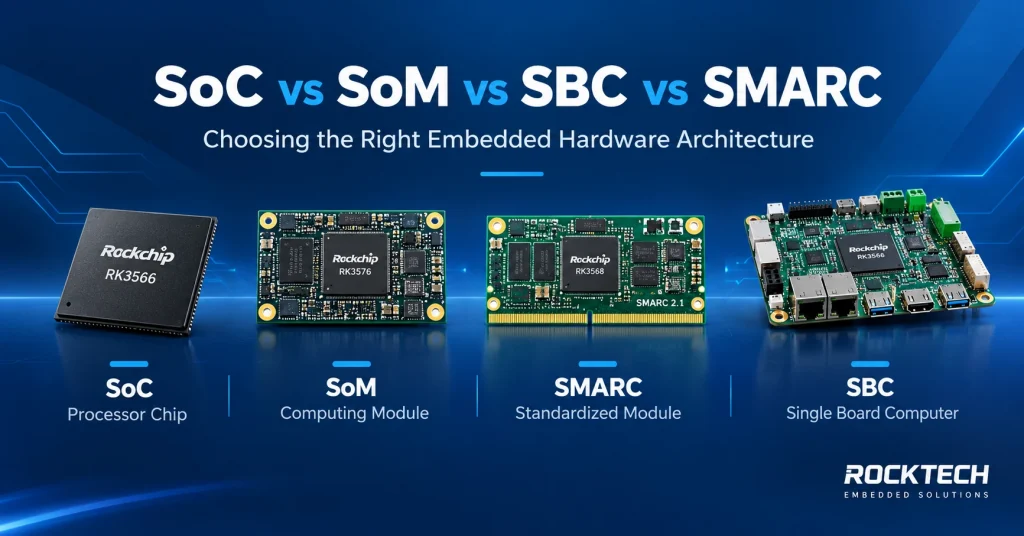
A System on Chip (SoC) is an integrated circuit that combines multiple computing functions into a single chip.
A typical application processor SoC may integrate:
- CPU cores for general-purpose processing
- GPU for graphics acceleration
- Display controllers
- Video processing engines
- Memory controllers
Peripheral interfaces such as USB, UART, SPI, I²C and Ethernet controllers
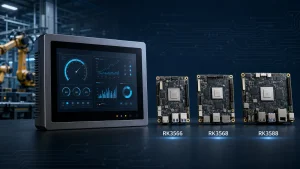
Popular embedded application processor families include Rockchip RK3566, RK3576, NXP i.MX and other ARM-based platforms.
However, an SoC alone is not a complete embedded computer. Most application processor designs require external DDR memory, non-volatile storage, power management circuitry and application-specific interfaces.
These additional components can be integrated into different hardware architectures, such as SoMs or SBCs.
2. What Is an SoM (System on Module)?
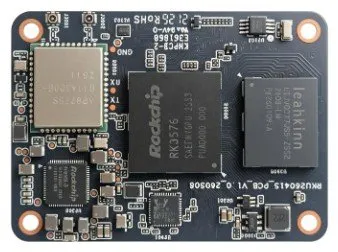
A System on Module (SoM) is a compact computing module that integrates the essential components required for an embedded computing system.
A typical SoM includes:
- SoC or application processor
- DDR memory
- eMMC or other non-volatile storage
- Power management circuitry
- Board-to-board or edge connectors
Rather than integrating all application-specific interfaces directly onto the module, a SoM typically connects to a separate carrier board.
The carrier board provides the physical connectors, additional interface circuitry, power input and other features required by the final product.
Advantages of SoM Architecture
- Shorter initial hardware development time
- Reusable computing modules across different products
- Reduced complexity when designing application-specific carrier boards
- Potential processor upgrade flexibility within compatible module families
Considerations
- Additional connectors and PCB assembly costs
- Mechanical height and space requirements
- Dependence on module suppliers and their product roadmaps
- Interface limitations determined by the module design
SoM architectures are particularly attractive for low-to-medium volume products, rapid prototyping and applications requiring modular computing platforms.
3. What Is SMARC?
SMARC (Smart Mobility ARChitecture) is a standardized form factor and interface specification for embedded computer modules.
Developed by SGET (Standardization Group for Embedded Technologies), SMARC defines module dimensions, connector interfaces and signal assignments to support interoperability between compliant modules and carrier boards.
Common SMARC module dimensions include 82 × 50 mm and 82 × 80 mm, with a 314-pin edge connector used in modern SMARC specifications.
Why Choose SMARC?
SMARC can be attractive when manufacturers want to:
- Standardize their embedded computing platform
- Reuse carrier board designs
- Evaluate modules from different suppliers
- Support future processor upgrades
- Reduce dependence on proprietary module form factors
However, using the same SMARC specification does not automatically guarantee complete interchangeability. Electrical interfaces, supported features, software compatibility, power requirements and thermal design must still be verified.
In simple terms, SMARC is a standardized type of SoM, while SoM is the broader category of computing modules.
4. What Is an SBC (Single Board Computer)?
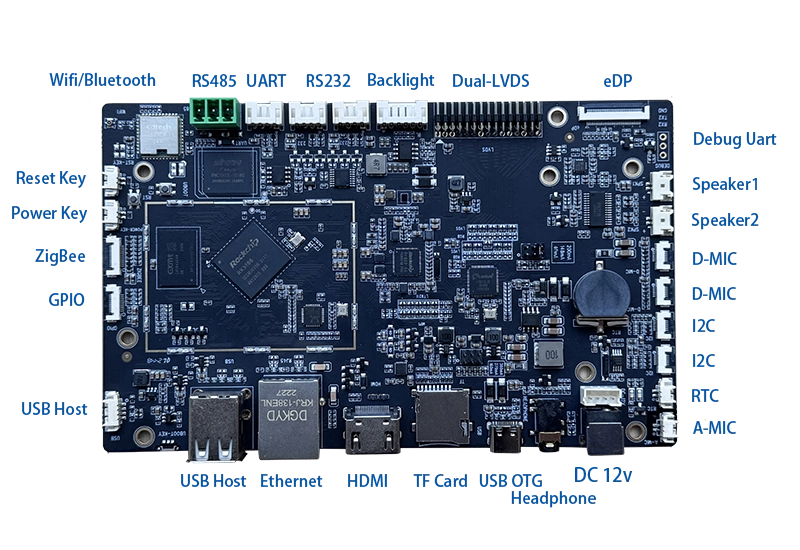
A Single Board Computer (SBC) integrates the main computing components and application interfaces onto a single PCB.
Unlike a typical SoM + carrier board design, an SBC does not require a separate computing module connected to a carrier board.
A customized SBC can integrate:
- Rockchip or other application processor SoC
- DDR and eMMC
- Power management circuits
- Ethernet, USB and serial communication interfaces
- CAN, RS232 and RS485 connectivity
- LVDS, MIPI DSI, HDMI or other display interfaces
- GPIO and application-specific connectors
The exact configuration depends on the selected processor and hardware design.
Advantages of a Customized SBC
1. Optimized Hardware Cost
By integrating computing and application-specific interfaces onto one PCB, manufacturers may eliminate module connectors and reduce redundant circuitry.
For products manufactured in consistent volumes, this can help optimize the overall bill of materials (BOM).
2. Flexible Interface Customization
A customized SBC can be designed around the specific requirements of the final product, including PCB dimensions, connector locations, input voltage and communication interfaces.
3. Compact Mechanical Integration
A single-board architecture may reduce overall assembly height and simplify integration into space-constrained devices.
4. Integrated Display and Touch Support
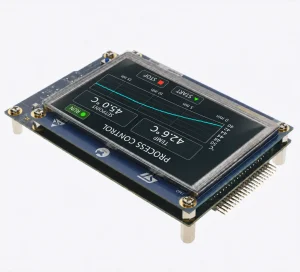
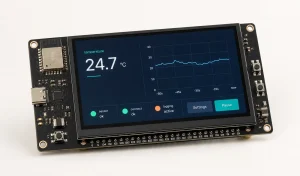
Custom SBCs can be developed alongside TFT LCD displays and projected capacitive touch panels, enabling application-specific HMI solutions.
Considerations
A customized SBC generally requires more upfront hardware development and validation than adopting an existing computing module.
Processor upgrades may also require PCB redesign and additional software adaptation.
Therefore, the most suitable architecture depends on production volume, development schedule, hardware requirements and long-term product strategy.
5. SoC vs SoM vs SBC vs SMARC: Key Differences
| Term | What It Is | Main Characteristics |
|---|---|---|
| SoC | Integrated processor chip | Combines multiple computing functions |
| SoM | Computing module | Processor, memory and essential circuitry on a compact PCB |
| SMARC | Standardized SoM specification | Defined mechanical dimensions and module interface |
| SBC | Complete single-board computer | Computing components and application interfaces integrated on one PCB |
For practical hardware architecture decisions, the more relevant comparison is often between a custom SBC and a SoM + carrier board solution.
6. Custom SBC vs SoM + Carrier Board: Which Should You Choose?
| Consideration | Custom SBC | SoM + Carrier Board |
|---|---|---|
| Hardware structure | Single PCB | Computing module plus carrier PCB |
| Initial development | Usually more custom engineering | Often faster with existing modules |
| Hardware customization | High flexibility | Primarily carrier board customization |
| BOM optimization | Potential advantages at volume | Additional module and connector costs |
| Processor upgrades | May require board redesign | Potentially easier with compatible modules |
| Mechanical integration | Can be optimized for the enclosure | Depends on module and carrier arrangement |
| Suitable applications | Dedicated OEM products | Modular and rapidly developed systems |
When Does a Custom SBC Make Sense?
A custom SBC is worth considering when:
- The product has clearly defined hardware requirements.
- Production volume justifies the initial engineering investment.
- Standard development boards contain unnecessary interfaces.
- PCB dimensions or connector locations require customization.
- The application requires dedicated display and touch integration.
- Long-term BOM optimization is a priority.
When Is a SoM-Based Solution More Suitable?
A SoM + carrier board architecture may be preferable when:
- Fast time to market is critical.
- Initial production volumes are relatively small.
- The manufacturer wants to reuse a computing module across multiple products.
- A compatible module ecosystem already exists.
- Processor upgrades without a complete carrier board redesign are a priority.
Neither architecture is universally better. The decision should consider total project cost, including engineering, certification, manufacturing, maintenance and lifecycle support.
7. Applications of Customized Embedded SBCs
Customized SBC solutions are widely used in industrial and commercial embedded systems.
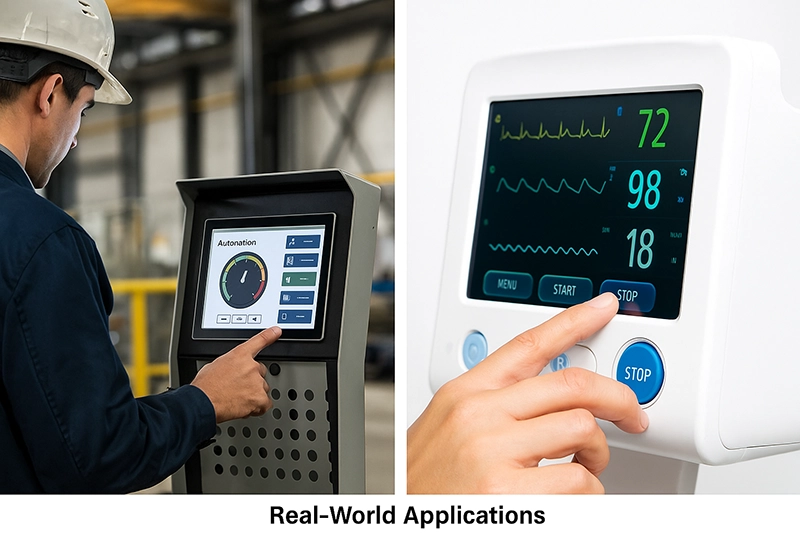
Industrial HMI and Automation
Industrial control panels may require Linux-based graphical interfaces, Ethernet connectivity, RS485 or CAN communication, and TFT LCD touchscreens.
A customized SBC allows these functions to be integrated according to the equipment manufacturer’s requirements.
Smart Home and HVAC Controllers
Heating, ventilation and building automation systems often require compact touch interfaces, networking capabilities and customized communication ports.
A dedicated embedded board can help integrate these functions into the final enclosure.
Medical Equipment Interfaces
Medical devices may require specific display sizes, reliable touch interfaces, controlled software configurations and long-term component availability.
Hardware architecture must also be evaluated against the applicable regulatory and certification requirements.
Transportation and Vehicle Systems
Transportation applications may require multiple displays, CAN communication, wide-range DC power input and Linux-based software.
Processor selection and hardware design must account for the specific environmental and electrical requirements of the application.
Smart Appliances and Self-Service Equipment
Coffee machines, vending systems, dispensing equipment and interactive kiosks can benefit from customized Android or Linux boards integrated with TFT LCD and capacitive touch displays.
8. Custom Rockchip SBC Design and Manufacturing at Rocktech
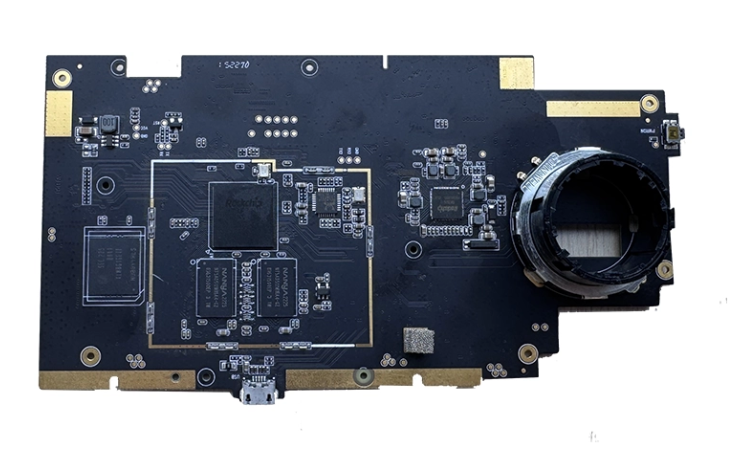
At Rocktech, we specialize in customized embedded Single Board Computer (SBC) solutions based on Rockchip and Allwinner processors.
Our SBC architecture integrates the SoC, DDR, eMMC, power management and application-specific interfaces onto a single PCB.
Rather than requiring customers to adapt their products around a fixed development board, we can customize the hardware according to their application requirements.
Our engineering capabilities include:
- Processor selection and embedded hardware design
- Customized PCB layout and interface configuration
- DDR and eMMC configuration
- Linux and Android BSP customization
- Driver integration and board-level testing
- TFT LCD and projected capacitive touch integration
- Customized cover glass and optical bonding
- Prototype development and volume manufacturing
By combining embedded computing with display and touch technologies, Rocktech supports OEM manufacturers developing integrated HMI solutions for industrial automation, smart appliances, HVAC systems, transportation and other embedded applications.
9. Frequently Asked Questions
Is an SBC the same as a SoM?
No. An SBC integrates the computing system and application interfaces onto a single PCB, while a SoM is a computing module typically connected to a separate carrier board.
Is SMARC a type of SoM?
Yes. SMARC is a standardized module specification defining mechanical dimensions and electrical interfaces for compatible embedded computing modules.
What is the difference between an MCU and an SoC?
An MCU is a microcontroller designed primarily for embedded control tasks. SoC is a broader term describing the integration of multiple system functions onto one chip. Some MCUs can also be considered SoCs.
Can a custom SBC replace a SoM and carrier board?
In many applications, yes. A custom SBC can combine the required computing and peripheral functions onto one PCB. However, hardware redesign, software adaptation and validation may be required.
Is a custom SBC cheaper than a SoM solution?
Not necessarily. A custom SBC may reduce recurring hardware costs at sufficient production volumes, while a standard SoM solution may offer lower initial development costs. The total cost depends on the application and production requirements.
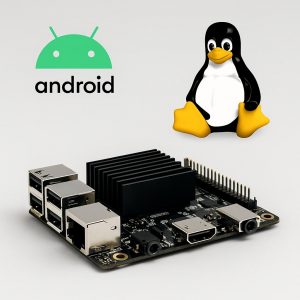
Can Rockchip SBCs run Linux and Android?
Many Rockchip processors support Linux and Android platforms. Actual operating system versions and BSP availability depend on the selected SoC and board configuration.
10. Conclusion: Choosing the Right Embedded Hardware Architecture
SoC, SoM, SMARC and SBC represent different concepts within embedded computing.
An SoC provides the processing foundation. A SoM packages the processor and essential components into a reusable computing module. SMARC defines a standardized module architecture, while an SBC integrates computing and application-specific functions onto a single board.
For OEM manufacturers developing dedicated industrial and commercial products, a customized SBC can provide greater design flexibility and opportunities for BOM optimization.
The right choice depends on your hardware requirements, development schedule, production volume and long-term product strategy.
Looking for a customized embedded SBC with TFT LCD and touch integration?
Contact Rocktech to discuss your processor, display, interface and mechanical requirements. Our engineering team can help evaluate a suitable embedded hardware solution for your next project.