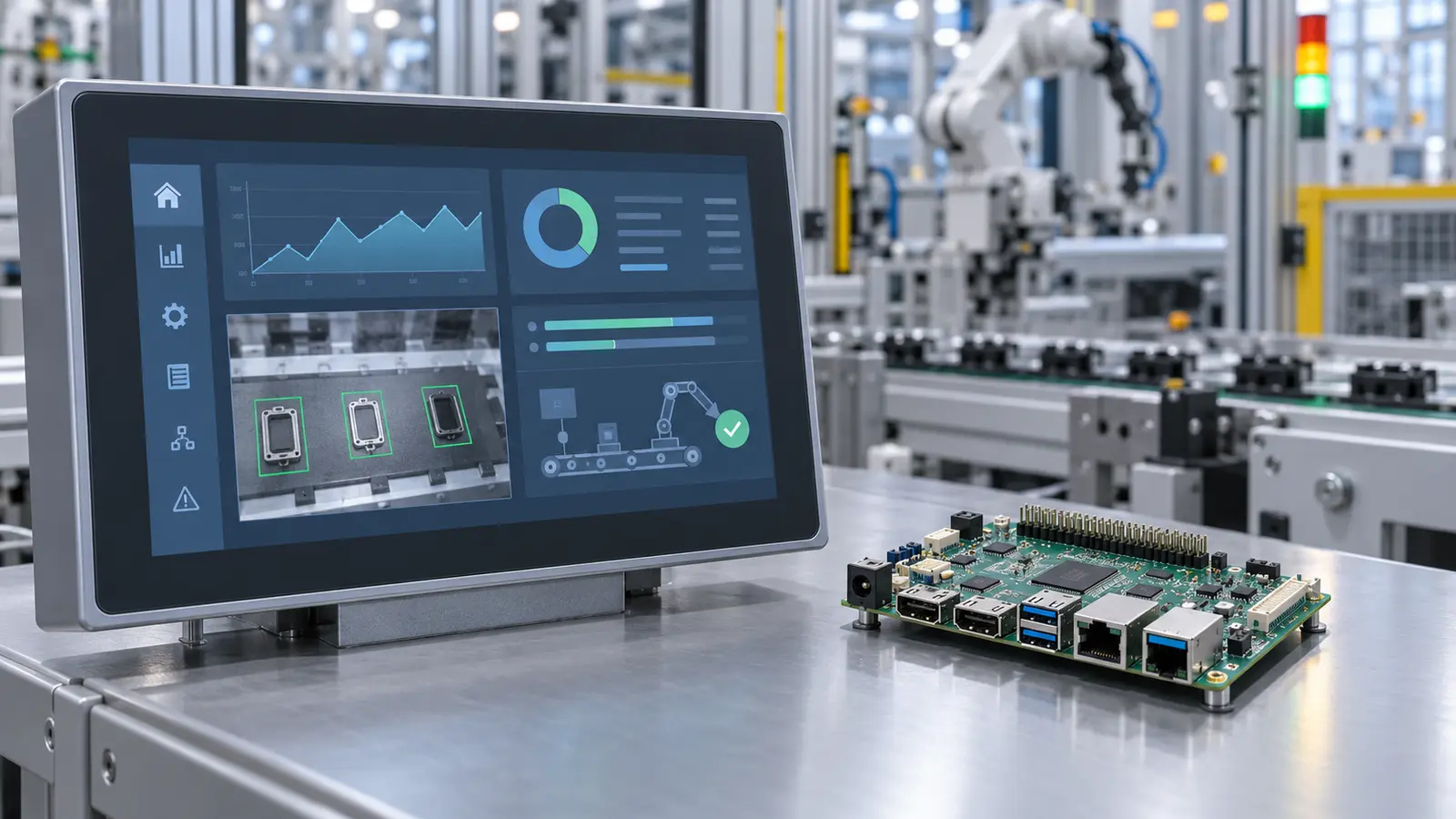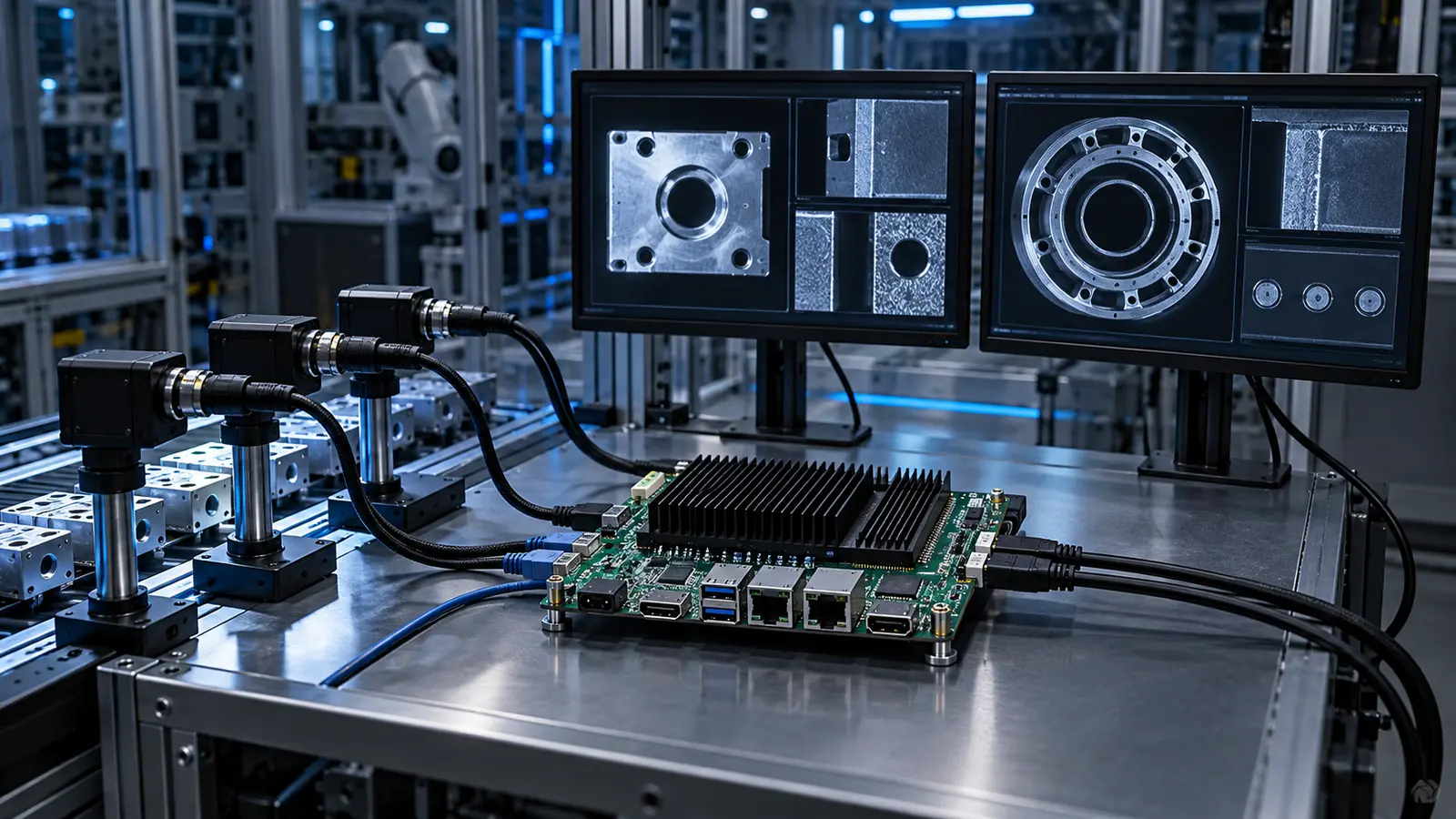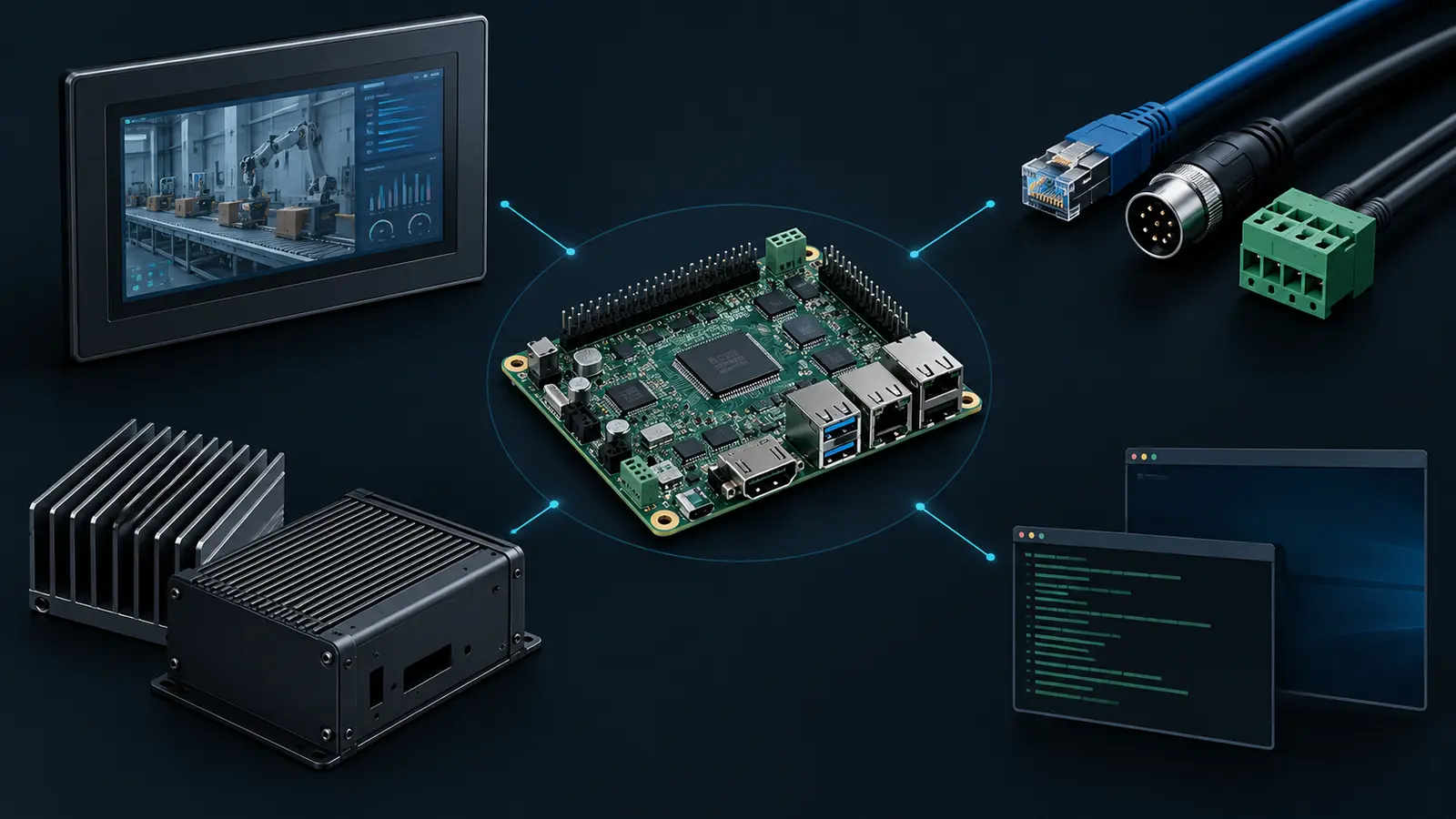
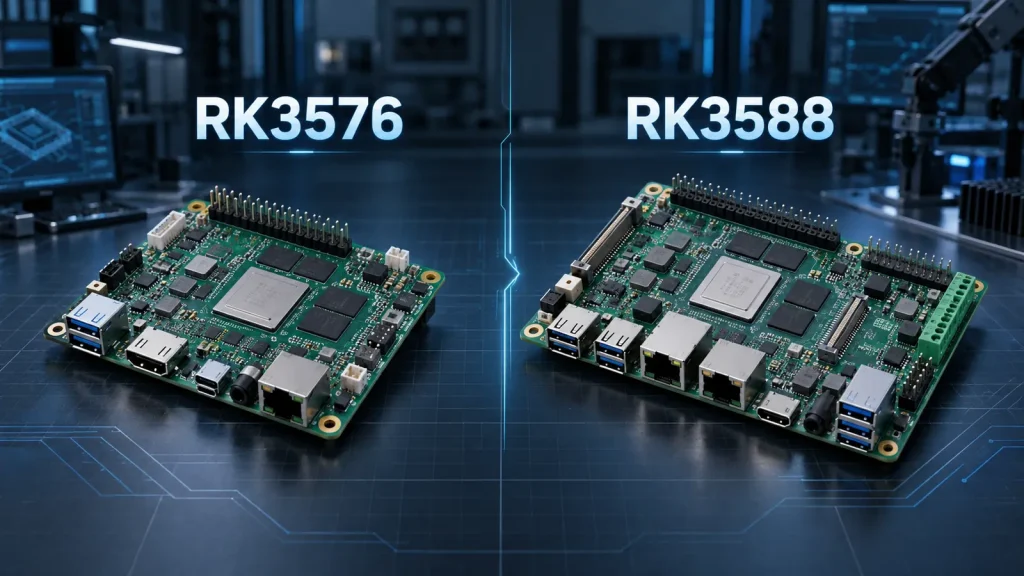
When engineers compare RK3576 vs RK3588, the first question is often: which processor is more powerful? For an industrial product, however, that is rarely the most useful starting point. The better question is whether the selected platform provides the right performance, display architecture, camera capability, interfaces and software support without adding unnecessary cost, power demand or design complexity.
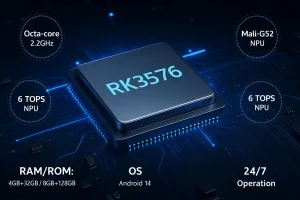
RK3588 remains the higher-performance platform, with more capable CPU and GPU architectures, greater memory bandwidth and stronger multimedia resources. RK3576 occupies a different and increasingly useful position. It offers an eight-core CPU, a 6 TOPS NPU, multiple display capability and industrial-oriented interfaces in a platform that may be better balanced for advanced HMI, AIoT and moderate edge AI applications.
This guide compares the two SoCs from a product-development perspective. It does not attempt to declare one universal winner. Instead, it explains when RK3576 may be sufficient, when RK3588 is justified, and what engineers should confirm before choosing an SBC for mass production.
RK3576 vs RK3588: Quick Comparison
The table below summarizes several important differences based on Rockchip’s published specifications. It describes SoC capability, not a guarantee that every function is implemented on a particular SBC. Board-level schematics, connector allocation and BSP support must still be checked.
| Comparison | RK3576 | RK3588 |
|---|---|---|
| CPU | 4× Cortex-A72 + 4× Cortex-A53, up to 2.2 GHz | 4× Cortex-A76 + 4× Cortex-A55 |
| GPU | Arm Mali-G52 MC3 | Arm Mali-G610 MP4 |
| NPU | Up to 6 TOPS | Up to 6 TOPS, triple-core architecture |
| Memory interface | 32-bit LPDDR4/LPDDR4X/LPDDR5 | Quad-channel 16-bit LPDDR4/LPDDR4X/LPDDR5 |
| Video capability | Up to 8K30 decoding and 4K60 encoding, format-dependent | Up to 8K60 decoding and 8K30 encoding, format-dependent |
| Image signal processor | 16 MP ISP with HDR and 3D noise reduction | Dual ISP architecture, up to 32 MP class processing |
| Display positioning | Up to three different display sources; includes MIPI DSI, HDMI/eDP, DP and parallel output resources | More extensive multi-display and high-resolution output capability, including HDMI, eDP/DP and MIPI resources |
| Typical product fit | Advanced HMI, AIoT terminals, moderate edge AI and cost-conscious intelligent devices | High-performance vision, multi-camera systems, demanding graphics, multi-display and advanced multimedia |
For exact processor details, refer to the official Rockchip RK3576 specifications and Rockchip RK3588 specifications. A final hardware decision should also be based on the selected board schematic, BSP version and actual application testing.
1. CPU Performance: How Much Computing Power Does the Product Need?
The RK3576 combines four Cortex-A72 performance cores with four Cortex-A53 efficiency cores. This is a substantial step above older quad-core Cortex-A55 platforms used in many conventional HMI panels. It can provide useful headroom for richer Android interfaces, Qt applications, local databases, web-based dashboards, protocol handling and background services.
RK3588 uses newer Cortex-A76 and Cortex-A55 cores and is the stronger choice when the product must sustain heavier processing. Examples include several demanding applications running simultaneously, complex browser-based interfaces, high-resolution video pipelines, machine-vision processing or workloads that cannot be fully offloaded to the NPU.
That does not mean every product benefits from selecting RK3588. A control panel that displays process data, manages field communication and runs one moderate AI function may not use the additional CPU capability. In that case, RK3576 can be a more practical architectural choice. CPU utilization should be evaluated under worst-case operating conditions, including the user interface, networking, storage access and AI inference running at the same time.
2. GPU and HMI Performance
The GPU difference is significant. RK3576 integrates a Mali-G52 MC3, while RK3588 uses a more capable Mali-G610 MP4. RK3588 therefore provides more graphics headroom for complex 3D rendering, high-resolution multi-screen interfaces and graphics-intensive applications.
For many industrial HMIs, however, the requirement is not maximum GPU performance. The target may be a responsive 7-inch, 10.1-inch or 15.6-inch touch interface with smooth transitions, charts, alarms, video preview and operator controls. RK3576 may comfortably support this type of interface when the resolution, UI framework, GPU driver and application are properly optimized.
Before selecting the processor, define the actual UI workload:
- Display resolution and refresh rate
- Number of simultaneous displays
- 2D or 3D rendering requirements
- Video windows and overlay requirements
- Android, Qt, web or another UI framework
- Animation complexity and expected frame rate
A processor comparison alone cannot predict interface smoothness. GPU driver maturity, memory bandwidth, application design and BSP configuration all affect the result.
3. RK3576 vs RK3588 NPU: Does the Same TOPS Mean the Same AI Performance?
Both RK3576 and RK3588 are specified with up to 6 TOPS of NPU performance. This frequently leads to the assumption that their AI performance is identical. In practice, TOPS is only one part of the evaluation.
Actual inference performance depends on several factors:
- Model architecture and input resolution
- INT8, INT4, FP16 or another precision mode
- Whether every operator is supported by the RKNN toolchain
- Model conversion and quantization quality
- Memory bandwidth and data movement
- CPU pre-processing and post-processing
- Camera capture and image-processing workload
- Thermal limits during continuous operation
RK3576 can be suitable for applications such as face recognition, basic object detection, voice interaction, occupancy analysis or anomaly detection. RK3588 becomes more attractive when the complete workload includes multiple camera streams, more demanding vision processing, heavier CPU-side logic or several concurrent AI tasks.
The safest method is to convert and benchmark the customer’s actual model on the target board. A statement such as “6 TOPS is enough” cannot be confirmed without knowing the model, framework, operators, required latency and number of input streams.
4. Display Capabilities for Industrial HMI
Display integration is often more important than the theoretical processor ranking. RK3576 provides a rich selection of display resources and supports up to three displays with different sources according to Rockchip. RK3588 offers a broader high-resolution, multi-display architecture and is better positioned for systems with several large screens or demanding multimedia output.
Nevertheless, an SoC supporting an interface does not mean every SBC exposes that interface. The board designer must allocate limited pins and high-speed lanes among display, camera, PCIe, SATA, USB and other functions. Some interfaces may also be multiplexed.
For an industrial display project, confirm at least:
- LCD interface: MIPI DSI, LVDS, eDP, RGB or HDMI
- Resolution, pixel clock and timing
- Number of displays and whether they show identical or different content
- Backlight voltage, current and dimming method
- LCD power sequence and reset timing
- Touch interface, interrupt and reset requirements
- BSP support for the exact LCD and touch controller
- Connector type, pin assignment and cable routing
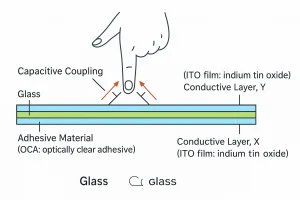
Rocktech’s approach is to evaluate the SBC, TFT LCD, capacitive touchscreen and cover glass as one display system. This reduces the risk of discovering late in development that the processor can theoretically support an interface but the selected board or BSP cannot support the required implementation.
5. Camera, Video and Machine-Vision Requirements
Camera requirements can quickly change the platform decision. RK3576 includes a 16 MP ISP and several MIPI CSI resources, making it relevant for intelligent terminals, access-control equipment, video communication and moderate vision applications. RK3588 provides a stronger ISP and multimedia architecture for more demanding camera and video systems.
Before choosing between RK3576 and RK3588, engineers should define:
- Number of cameras
- Camera interface and lane configuration
- Resolution and frame rate per camera
- Simultaneous capture requirements
- Hardware decoding and encoding formats
- AI inference rate and acceptable latency
- Whether video must also be displayed, recorded or streamed
A single-camera recognition terminal and a four-camera analytics system may both be described as “edge AI,” but their hardware requirements are very different. RK3576 may be appropriate for the first, while the second may justify RK3588 or require a more detailed system benchmark.
6. Industrial Connectivity and Expansion
RK3576 offers a useful mix of high-speed and industrial interfaces, including PCIe, USB 3.0, SATA, dual RGMII and integrated CAN FD resources. This makes it attractive for products that combine an HMI with gateway, storage or machine-communication functions.
RK3588 offers greater high-speed expansion resources and is often selected when a system needs several data-intensive peripherals. However, the final number of usable ports depends on the board design. An SBC specification should distinguish clearly between SoC capability and connectors actually available to the customer.
Typical project questions include:
- How many Ethernet ports are required, and at what speed?
- Are RS485, RS232 or CAN interfaces required?
- Do these interfaces require galvanic isolation?
- Is M.2 needed for SSD, Wi-Fi, 4G or 5G?
- Which USB ports must operate simultaneously?
- Does the product need digital input/output, relay control or ADC?
- Are any high-speed lanes shared between required functions?
RS485 and RS232 normally require external transceivers, protection components and connector design. Similarly, an integrated CAN controller still requires the correct board-level transceiver and protection. The existence of a controller inside the SoC is only the first step.
7. Android and Linux Software Support
Rockchip publishes Android and Linux SDK support for both platforms, but operating-system support must be evaluated at board level. A working reference BSP does not automatically mean that every display, touch controller, camera, communication interface and customer application has already been validated.
Important software questions include:
- Required Android or Linux version
- Buildroot, Yocto, Debian, Ubuntu or another distribution
- LCD timing and touch-driver integration
- GPU and video acceleration
- RKNN runtime and model-conversion workflow
- Boot time and automatic application launch
- Watchdog, recovery and factory-reset behavior
- OTA update method and long-term version control
- Customer application migration and test responsibility
If the operating-system decision is still open, see our guide to Android SBC vs Linux SBC. The correct choice depends on UI requirements, development resources, peripheral integration and long-term software maintenance.
8. Power Consumption and Thermal Design
RK3576 is frequently considered when designers need more performance than a mainstream HMI processor but want to avoid automatically adopting the system complexity associated with a flagship platform. This can be a reasonable starting point, but it should not be converted into an unsupported claim that every RK3576 board consumes a fixed amount less power than every RK3588 board.
Actual power consumption depends on:
- CPU, GPU and NPU utilization
- RAM capacity and memory activity
- eMMC, UFS or SSD configuration
- Camera and video workload
- Ethernet, wireless and USB peripherals
- LCD size, brightness and backlight power
- Input-voltage conversion efficiency
- Software power-management settings
Thermal validation must be performed inside the final enclosure. A board that operates normally on an open test bench may behave differently inside a sealed plastic or metal housing. Engineers should measure the SoC, PMIC, memory, storage and internal ambient temperature under maximum sustained workload and at the specified external temperature.
Heat sinks, thermal pads, enclosure conduction and ventilation should be designed around real measurements. If performance throttling would affect the application, the validation plan should include a sustained worst-case workload rather than only a short functional test.
9. PCB Complexity and Total System Cost
The SoC purchase price is only one element of the finished-product cost. RK3588’s stronger performance and broader high-speed resources may require a more complex PCB, memory architecture, power design and thermal solution. If the application genuinely uses these capabilities, the additional investment is justified. If it does not, the design may carry cost and risk without creating value for the end user.
Total system cost should include:
- SoC, PMIC, RAM and storage
- PCB size, layer count and high-speed layout
- Connectors, transceivers and protection circuits
- Cooling components and enclosure design
- Power supply capacity
- BSP customization and driver development
- AI model conversion and optimization
- EMC, ESD, thermal and reliability validation
- Production testing and long-term maintenance
A lower-cost SoC does not guarantee a lower final cost, because a poorly matched platform can create additional engineering work. Equally, selecting the highest-performance SoC “for future use” may increase current hardware and validation costs without a defined future requirement.
10. When Is RK3576 the Better Choice?

RK3576 deserves serious consideration when the application needs a clear performance step above conventional HMI platforms but does not require the full CPU, GPU, memory and multimedia capability of RK3588.
Typical candidates include:
- Advanced industrial HMI with a rich graphical interface
- AI-enabled building or energy control panels
- Face or voice recognition terminals
- Smart retail and self-service equipment
- Medical interface and data-processing terminals
- Single-camera or moderate machine-vision applications
- Local anomaly detection and condition monitoring
- Products combining HMI, gateway and edge-processing functions
RK3576 is particularly relevant when RK3566-class performance is insufficient, but the customer is still sensitive to board complexity, thermal design and total product cost. For more background on its AI use cases, read how RK3576 enables edge AI in industrial control panels.
11. When Is RK3588 Still the Better Choice?

RK3588 remains the more appropriate starting point when the product depends on maximum general-purpose computing, graphics, memory bandwidth, camera processing or multimedia capability.
Typical examples include:
- Multi-camera analytics and demanding machine vision
- High-resolution multi-display systems
- Complex 3D graphics or visualization
- Heavy video decoding, encoding or transcoding
- Several concurrent high-load applications
- AI workloads with substantial CPU pre- and post-processing
- Systems requiring more high-speed peripheral expansion
The decision should be based on measurable workload requirements. If an RK3576 prototype cannot meet the required latency, frame rate, UI responsiveness or expansion architecture with adequate margin, RK3588 may be the safer platform.
12. Application-Based Selection Guide
| Application | Suggested Starting Point | Reason |
|---|---|---|
| Standard industrial HMI | RK3566 or RK3568 | Avoid unnecessary performance and cost if AI and advanced graphics are not required. |
| Advanced graphical HMI | RK3576 | Useful balance of CPU, graphics, display and system capability. |
| AI-enabled control panel | RK3576 | Integrated 6 TOPS NPU with strong HMI and connectivity resources. |
| Face-recognition terminal | RK3576 or RK3588 | Depends on camera count, model, input resolution and latency target. |
| Multi-camera machine vision | RK3588 | Stronger overall CPU, GPU, ISP and memory architecture. |
| High-resolution multi-display system | RK3588, subject to interface review | More extensive display and multimedia capability. |
| Cost-conscious edge device | RK3576 | May provide sufficient performance without adopting the full RK3588 platform. |
| Heavy AI plus video workload | RK3588 | More suitable when AI operates alongside demanding CPU, GPU and video tasks. |
This table is a starting point rather than a final design rule. “AI HMI” and “machine vision” are broad descriptions; the actual model, camera pipeline, display configuration and software architecture must be reviewed.
13. What Should Be Confirmed Before Selecting an RK3576 or RK3588 SBC?

A useful platform recommendation requires more than a processor name. Before hardware development begins, prepare the following information:
- Product application and main workloads
- Required Android or Linux version
- LCD size, resolution, brightness and interface
- Number of displays and display mode
- Touch-panel and cover-glass requirements
- Camera quantity, interface, resolution and frame rate
- AI model, framework, input size and latency target
- RAM, eMMC, UFS or SSD requirement
- Ethernet, Wi-Fi, Bluetooth, 4G or 5G
- RS485, RS232, CAN and other industrial I/O
- Input voltage and power-control requirements
- PCB dimensions and connector locations
- Operating and storage temperature
- EMC, ESD and certification requirements
- Annual quantity and expected product lifetime
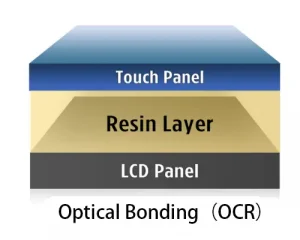
Rocktech provides custom SBC development together with industrial TFT displays, PCAP touchscreens, cover-glass customization and optical bonding. Evaluating these elements together can simplify display integration and reduce system-level compatibility risk.
Conclusion: Choose the System, Not Just the Processor
The RK3576 vs RK3588 decision should not be reduced to which processor wins a specification comparison. RK3588 delivers the stronger CPU, GPU, memory and multimedia platform and remains the logical choice for demanding vision, graphics, multi-display and high-load computing applications.
RK3576 has a different advantage. It can provide enough performance for many advanced industrial HMI, AIoT and moderate edge AI products while allowing the designer to avoid capabilities that the finished product may never use. For projects that have outgrown RK3566-class platforms but do not require the full RK3588 architecture, RK3576 may offer the more balanced solution.
The final decision should be made by testing the complete workload—including UI, displays, cameras, AI inference, communication and storage—on the target hardware and inside the final enclosure. The best SoC is the one that meets the product requirements with adequate margin and a manageable path to long-term production.
Frequently Asked Questions
What is the main difference between RK3576 and RK3588?
RK3588 uses more powerful Cortex-A76 and Cortex-A55 CPU cores, a Mali-G610 MP4 GPU, greater memory bandwidth and stronger multimedia resources. RK3576 uses Cortex-A72 and Cortex-A53 cores with a Mali-G52 MC3 GPU and is positioned as a balanced AIoT platform for advanced HMI, edge intelligence and connected devices.
Is RK3576 a good alternative to RK3588?
Yes, for applications that do not require the full CPU, GPU, camera, memory or multimedia capability of RK3588. RK3576 can be a practical alternative for advanced industrial HMI, single-camera recognition, smart control panels and moderate edge AI. It is not a universal drop-in replacement, and the complete interface and software requirements must be checked.
Is RK3576 suitable for industrial HMI applications?
RK3576 can be suitable for industrial HMI products requiring a rich user interface, multiple communication functions, multimedia or local AI. Industrial reliability still depends on the complete board design, component selection, power protection, thermal management, BSP stability and system validation—not on the SoC alone.
How many TOPS does the RK3576 NPU provide?
Rockchip specifies the RK3576 NPU at up to 6 TOPS. Actual model performance depends on precision, operator support, model conversion, memory access, pre-processing, post-processing and thermal conditions. The customer’s actual model should be benchmarked on the target board.
Does RK3576 support Android and Linux?
Rockchip lists Android and Linux SDK support for RK3576. Actual operating-system availability, kernel version, drivers and peripheral support depend on the selected SBC and BSP. These should be confirmed before the hardware is finalized.
Can RK3576 support multiple displays?
Rockchip specifies support for up to three displays with different sources. The actual number, resolution and combination of usable outputs depend on the board design, interface multiplexing, display timing and BSP implementation.
Which consumes less power, RK3576 or RK3588?
RK3576 is often evaluated for products seeking a balance between performance and system complexity, but a fixed power difference should not be assumed. Actual consumption depends on board configuration, memory, storage, peripherals, display, workload and software power management. Both platforms should be measured under the intended operating conditions.
Should I choose RK3576 or RK3588 for machine vision?
RK3576 may be sufficient for a moderate single-camera vision application. RK3588 is generally the stronger starting point for multiple cameras, higher resolutions, heavier image processing or concurrent AI and video tasks. A decision requires the camera specification, AI model and target frame rate.
Can Rocktech customize an RK3576 SBC for a specific display?
Yes. Rocktech can evaluate custom SBC requirements together with the TFT LCD, capacitive touchscreen, cover glass and optical bonding. The required display interface, timing, touch controller, backlight, connectors, operating system and annual quantity should be provided for feasibility evaluation.