
TFT Interface

Understanding common TFT display interfaces in embedded systems

The TFT interface defines how image data is transferred from the processor to the display panel, and it has a direct impact on performance, complexity, and overall system stability. In embedded and industrial designs, selecting the right interface is just as important as choosing the panel itself. Factors such as resolution, refresh rate, cable length, EMI sensitivity, and SoC compatibility all influence this decision. Common TFT interfaces include LVDS, RGB, MIPI-DSI, and MCU-type interfaces, each serving different design goals and system constraints. This tag focuses on practical interface selection and integration rather than theoretical specifications.

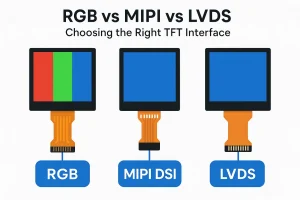
LVDS, RGB, MIPI, and MCU interfaces: how to choose the right one

LVDS is widely used in industrial displays for its strong noise immunity and ability to support higher resolutions over longer cable lengths, making it suitable for larger panels and electrically noisy environments. RGB interfaces offer simplicity and low latency, often used in smaller displays or systems where the processor and panel are placed close together. MIPI-DSI is common in modern SoCs, providing high bandwidth with fewer pins and lower power consumption, but it requires careful timing and signal integrity design. MCU interfaces, typically based on parallel or serial command-driven transfers, are well suited for low-resolution displays and simple graphics where cost and pin count are critical. The articles under this tag examine real integration cases, signal considerations, and typical pitfalls, helping engineers match the right TFT interface to their application’s performance, cost, and reliability requirements.

🏷️ Related Tags

Explore more content closely related to this topic.