

Industrial IPS Screens

Why IPS technology is widely used in industrial displays

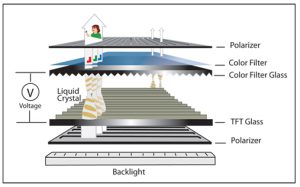
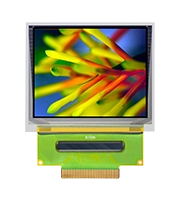
Industrial IPS screens are TFT displays based on In-Plane Switching technology, designed to deliver stable image quality in demanding working environments. Compared with traditional TN panels, IPS screens provide much wider viewing angles, more consistent color reproduction, and better contrast stability when viewed from different directions. These characteristics make IPS a preferred choice for industrial HMIs, control panels, and equipment interfaces where operators may view the screen from varying positions.

In real industrial deployments, displays are often mounted vertically, tilted, or embedded in enclosures where ideal viewing conditions cannot be guaranteed. IPS technology helps ensure that critical information remains readable without color inversion or brightness loss. This reliability is one of the main reasons IPS has become a standard option for modern industrial screens.

Practical considerations when using industrial IPS screens

Selecting an industrial IPS screen involves more than choosing viewing angle specifications. Engineers must consider brightness requirements, interface compatibility, touch integration, and optical treatments such as anti-glare or optical bonding. IPS panels are commonly paired with LVDS or MIPI interfaces and are available across a wide range of sizes and resolutions, making them suitable for both compact panels and larger displays.

Long-term availability and consistency are also key factors in industrial projects. IPS screens used in industrial products are typically sourced with controlled revisions and extended supply lifecycles to reduce redesign risk. The articles under this tag focus on real-world selection criteria, integration tips, and performance trade-offs, helping designers decide when industrial IPS screens are the right solution for clarity, stability, and long-term reliability.

🏷️ Related Tags

Explore more content closely related to this topic.