Capacitive Touch Screen

Understanding Capacitive Touch Screen Technology

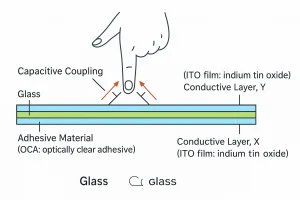
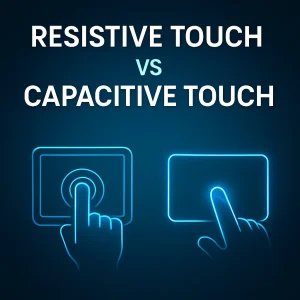
A capacitive touch screen is one of the most widely used human–machine interface technologies in modern embedded systems, industrial control panels, and smart devices. Unlike resistive touch panels that rely on pressure, capacitive touch screens detect changes in an electrostatic field when a conductive object—typically a human finger—approaches or touches the surface. This enables faster response time, higher transparency, and a smoother user experience.

In industrial TFT LCD applications, projected capacitive (PCAP) touch is the dominant solution. It consists of a transparent conductive layer, usually based on ITO (Indium Tin Oxide), arranged in a grid pattern. A touch controller continuously scans this grid and calculates the exact touch coordinates based on capacitance variation. The result is high accuracy, multi-touch capability, and stable performance even under complex UI interactions.

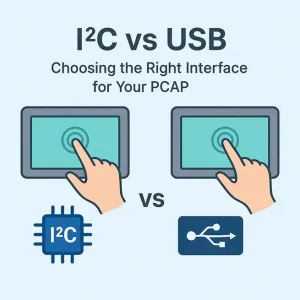
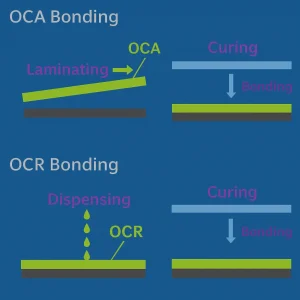
Capacitive touch screens are often integrated with cover glass, optical bonding, and surface treatments such as AG (anti-glare), AR (anti-reflection), or AF (anti-fingerprint). These enhancements improve outdoor readability, durability, and long-term usability. For embedded projects, it is important to evaluate controller compatibility (I²C/USB interface), glove or water tolerance requirements, EMI resistance, and mechanical integration constraints early in the design phase.

This tag gathers technical insights and practical guidance related to capacitive touch integration, controller selection, customization options, and reliability considerations in industrial and embedded display systems.

Key Considerations for Integration and Customization

When selecting a capacitive touch screen for industrial or embedded products, the integration process goes far beyond simply choosing a panel size. Electrical compatibility with the main control board is critical. Most PCAP controllers communicate via I²C or USB, and driver support within Linux or Android systems must be verified early to avoid firmware modification delays. For Rockchip or other ARM-based SBC platforms, stable driver support and proper device tree configuration are especially important.

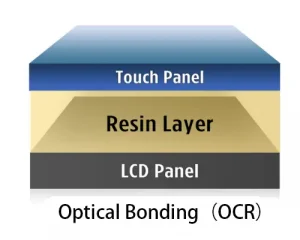
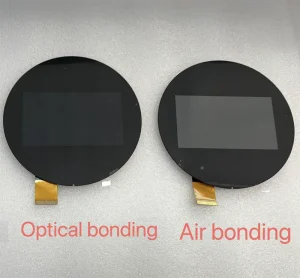
Mechanical structure also plays a major role. The thickness of the cover glass, the bonding method (air bonding or optical bonding), and the type of gasket or sealing design will directly affect sensitivity and long-term durability. Thicker cover glass improves impact resistance and IK rating performance, but it requires a stronger sensor design and controller tuning to maintain accurate touch detection.

Environmental tolerance should be evaluated according to the real application scenario. Industrial environments may involve electrical noise, humidity, water droplets, oil contamination, or operators wearing gloves. Advanced capacitive touch solutions can support glove mode, water rejection algorithms, and enhanced EMI shielding structures to ensure stable operation.

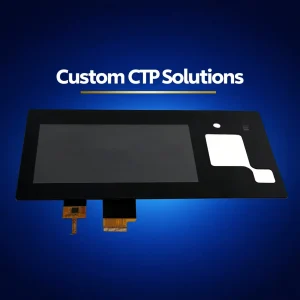
Finally, customization flexibility is often a deciding factor. Custom shapes, silk printing, logo integration, functional key areas, and specific firmware tuning can significantly enhance product differentiation. A well-designed capacitive touch screen does not only enable interaction—it strengthens the overall reliability and user perception of the final device.

🏷️ Related Tags

Explore more content closely related to this topic.