MIPI interface technology is increasingly seen in today’s electronic devices in particular in the field of small embedded systems, mobile devices and display applications. It provides a high-speed communication method between processors and peripheral components while helping reduce the number of physical connections.
For display applications, MIPI DSI is one of the most widely used MIPI standards. It is commonly found in TFT and OLED displays where high bandwidth, compact design, and efficient data transmission are important.
This article discusses what a MIPI interface is, how MIPI DSI operates, how it differs from other display interfaces like LVDS and what to consider when choosing a MIPI display for an embedded project.
What Is a MIPI Interface?
MIPI stands for Mobile Industry Processor Interface. It is a set of interface specifications developed by the MIPI Alliance to enable communication between processors and various components in electronic systems.
Although the name originated from the mobile industry, MIPI technology is now used in a much broader range of applications, including industrial equipment, medical devices, automotive electronics, portable instruments, and embedded systems.
It is important to note that MIPI is not a single interface. Instead, it refers to a family of interface standards designed for different applications.
What Are the Main Types of MIPI Interfaces?
Different MIPI specifications are designed for different types of devices and data.
MIPI DSI (Display Serial Interface) is designed for displays. It is widely used to connect a processor or SoC to a TFT LCD or OLED panel.
MIPI CSI (Camera Serial Interface) is mainly used to connect image sensors or cameras to processors in applications such as smartphones, embedded vision systems, and industrial cameras.
MIPI I3C is designed for communication between processors and sensors or other peripheral devices.
There are also other MIPI specifications developed for specific applications, including automotive and physical-layer technologies.
Of these standards, one of the most relevant for display applications is MIPI DSI, which is a high-speed serial interface between the processor and the display.
What Is MIPI DSI for TFT LCD Displays?
What Is MIPI DSI?
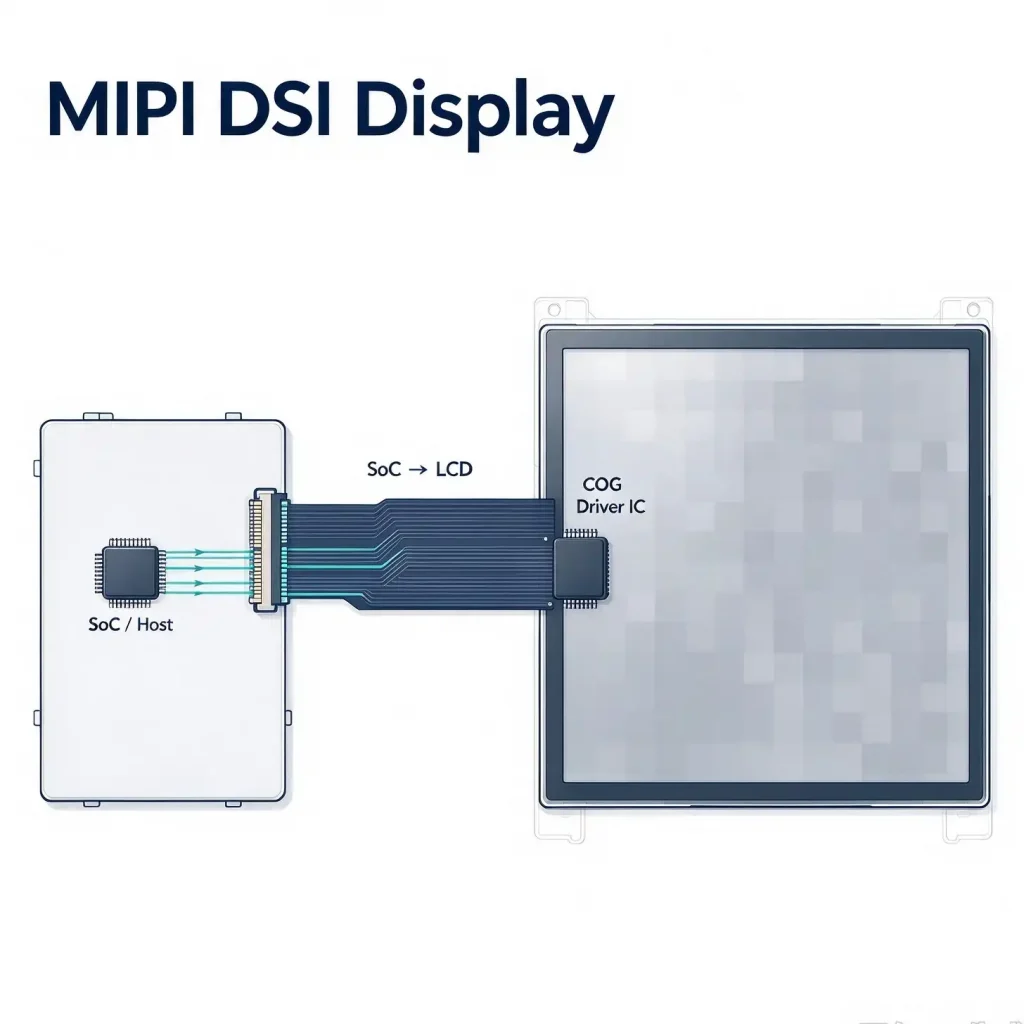
MIPI DSI stands for MIPI Display Serial Interface. It is a high-speed serial interface designed to transmit display data from a processor or system-on-chip (SoC) to a display module.
The processor produces the image data and transmits it via the MIPI-DSI interface to the system in a typical system. The display driver IC will process the inputted data and control the TFT LCD panel.
A simplified signal path can be represented as:
Processor / SoC → MIPI DSI → Display Driver IC → TFT LCD
MIPI DSI is particularly suitable for embedded products where high data bandwidth and a compact hardware design are required.
How Does a MIPI DSI Interface Work?
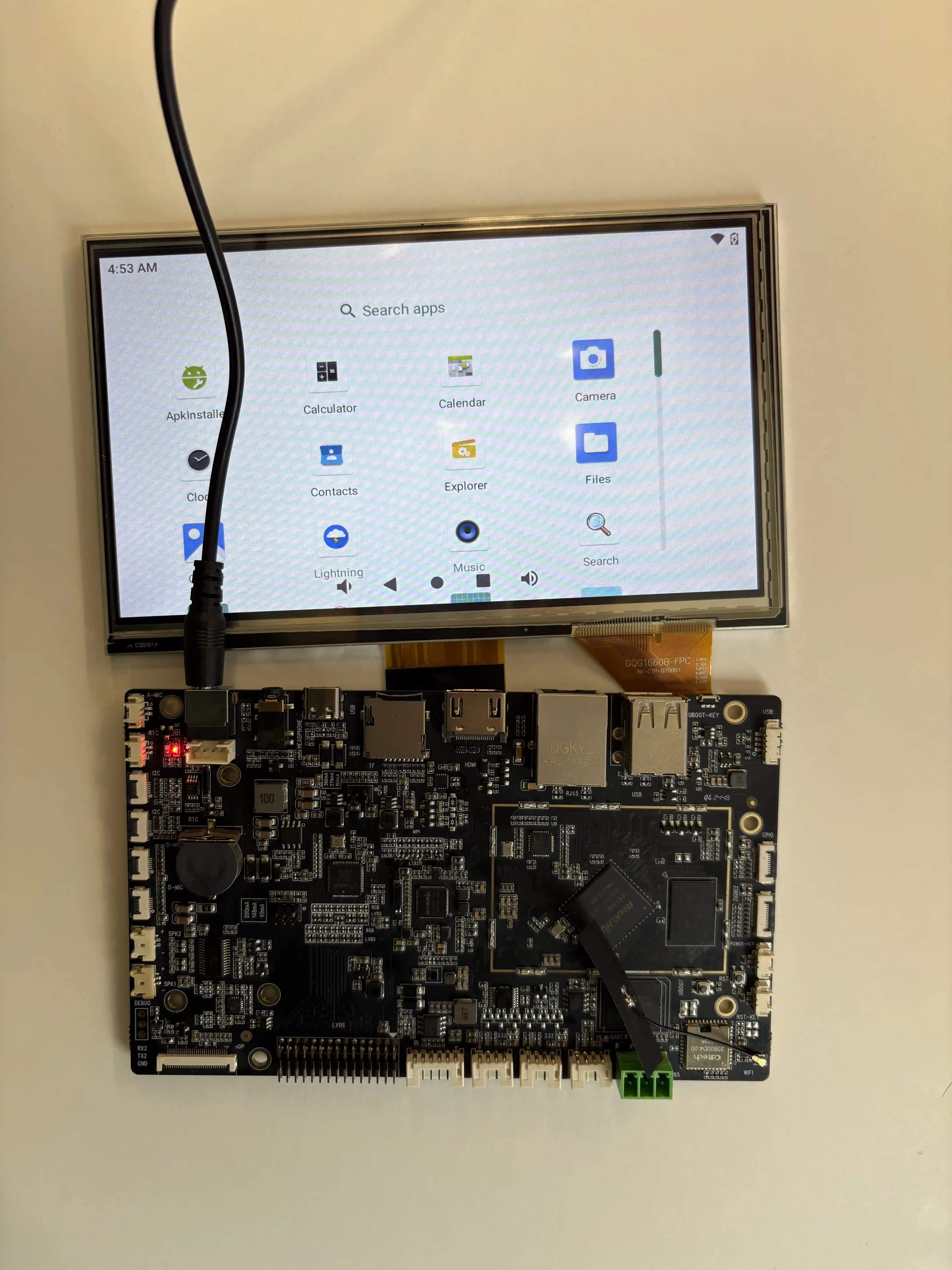
MIPI DSI Data and Clock Lanes
The MIPI DSI is based on high-speed differential serial data transmission using signal pairs, rather than a traditional parallel RGB interface.
A typical connection consists of:
- Clock Lane – carries the clock signal.
- Data Lanes – carry display data.
Depending on the display and system requirements, a MIPI DSI display may use one, two, or four data lanes.
More data lanes can provide greater data bandwidth, but the required configuration depends on factors such as display resolution, refresh rate, pixel format, and the capabilities of the processor.
Hence, the number of MIPI lanes should be verified when connecting a display to a host processor.
How Does MIPI Transfer Data to a TFT LCD?
At a basic level, the processor first generates the image data required by the display. The MIPI DSI interface then transmits this information through high-speed differential signals.
The display-side driver IC receives the data and converts it into the signals required to control the display.
MIPI DSI can operate using different signaling modes, including High-Speed (HS) mode for high-speed data transmission and Low-Power (LP) mode for lower-speed control and communication.
This architecture enables a lower number of signal lines to transmit a lot of display data in small electronic products, thus making it suitable for MIPI.
MIPI vs LVDS: What Is the Difference?
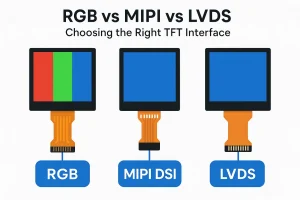
When selecting an interface for a TFT display, MIPI vs LVDS is a common comparison. Both technologies can provide high-speed differential data transmission, but they are designed for different system architectures and have different implementation characteristics.
MIPI vs LVDS: Key Differences
MIPI uses a high-speed serial architecture with a relatively small number of signal connections. LVDS, or Low-Voltage Differential Signaling, is also a differential transmission technology and has been widely used in industrial and larger-format displays.
The key differences include:
| Feature | MIPI | LVDS |
|---|---|---|
| Transmission | High-speed serial | Differential serial |
| Signal connections | Relatively low | Generally higher |
| PCB routing | Compact | Requires more signal routing |
| Bandwidth | High | High |
| Typical applications | Mobile and embedded displays | Industrial and larger displays |
| Processor compatibility | Requires MIPI DSI support | Requires LVDS support or conversion |
MIPI is beneficial in situations where space on the PCB is at a premium and the number of signal connections are important. LVDS is still a popular option for industrial display applications, where the system architecture and processor already support LVDS.
The decision should be made on the basis of the entire system requirements and not just the names of the interface.
When Should You Choose MIPI DSI or LVDS?
There is no single interface that is suitable for every TFT display application.
When comparing MIPI and LVDS, consider:
- Processor or SoC interface support
- Display resolution
- Refresh rate
- Required data bandwidth
- Number of signal lines
- PCB space
- Cable or FPC distance
- System architecture
- Display availability
MIPI DSI is frequently chosen for smaller embedded applications where the limited number of signals and high speed connection are advantageous. Where an LVDS-based display architecture is used, LVDS may be an appropriate solution.
For a new project, it is recommended to confirm the interface requirements between the processor and display before selecting the TFT LCD.
Frequently Asked Questions about MIPI interface
What Is a MIPI Interface?
A MIPI interface is a group of communication standards developed by the MIPI Alliance for connecting processors with different components, including displays, cameras, and sensors.
What Is MIPI DSI Used For?
MIPI DSI is mainly used for transferring display data between a processor or SoC and a display module, such as a TFT LCD or OLED panel.
What Is the Difference Between MIPI DSI and MIPI CSI?
MIPI DSI is designed for display applications, while MIPI CSI is mainly used for camera and image sensor applications.
Is MIPI Better Than LVDS?
The two standards, MIPI and LVDS, cater to different types of application needs. The appropriate interface to use is determined by the processor, display resolution, bandwidth, PCB space, and system architecture.
Choosing the Right MIPI DSI Display Solution
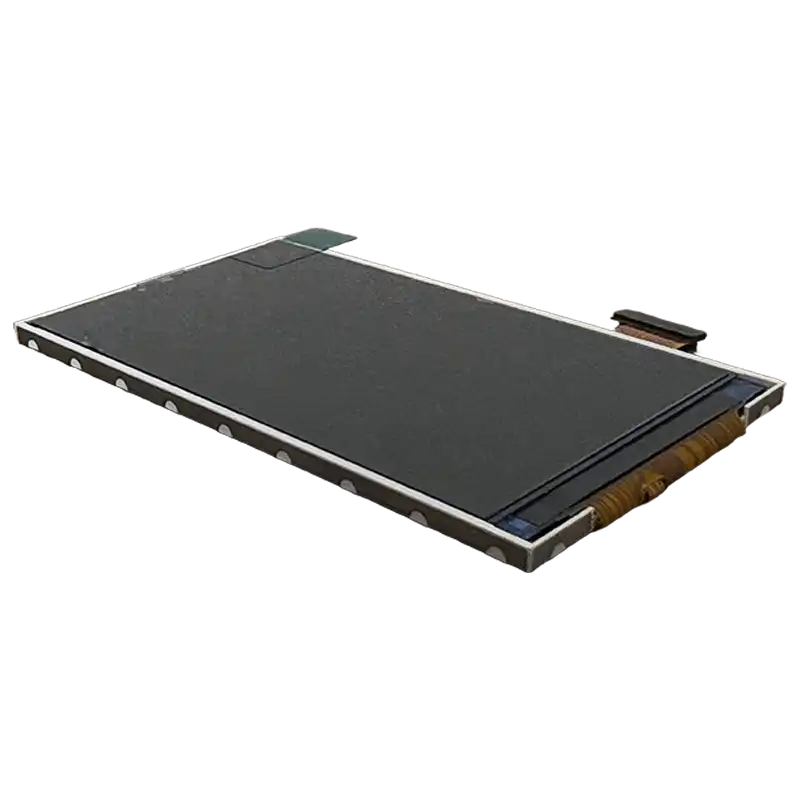
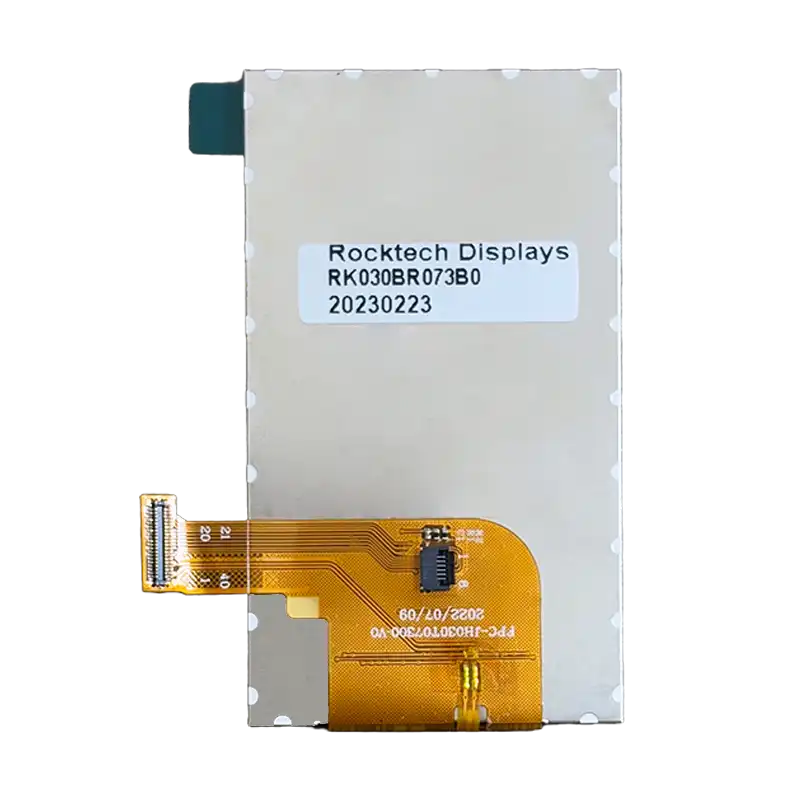
With its high-speed transmission and low pin count and compact design, MIPI interface technology has emerged as an important solution for modern embedded display applications.
Among different MIPI standards, MIPI DSI is widely used for connecting processors with TFT displays in industrial, medical, automotive, and portable applications.
When selecting a MIPI DSI display, it is important to consider not only the interface compatibility but also factors such as display resolution, lane configuration, mechanical design, and application requirements.