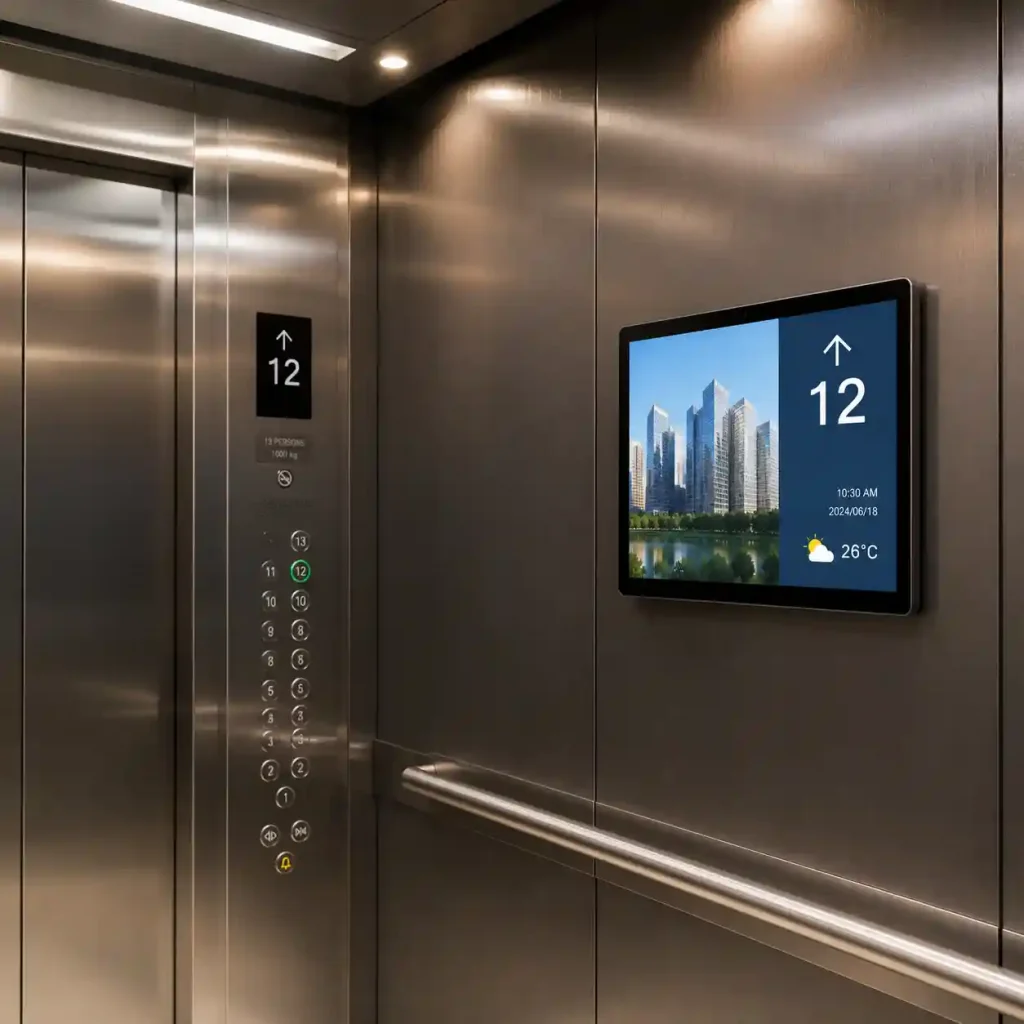
As noted by Elevator World, today’s elevator information systems are undergoing a transformation from simple floor indicators to multimedia information, building information and interactive user interfaces. Modern elevators are no longer just a means of transportation; they have become an essential part of intelligent buildings, delivering a safer, more efficient, and more interactive passenger experience. With the emergence of smart buildings, there has been a growing need for advanced elevator display solutions. Display technology is vital to improving the user interaction and building communication from destination control terminals at building lobbies to information displays in elevator cabins.
Why Modern Elevator Display Systems Use Industrial TFT LCD
Elevator monitor systems have evolved alongside building automation and smart transportation technologies. Traditional LED indicators and segment displays were reliable for showing floor numbers and travel direction, but they offered limited functionality and could not support the richer information and interactive experience expected in modern buildings.
Modern LCD display for elevator applications address these limitations by providing high-resolution graphics, full-color images, video playback, and touch-enabled interfaces. This allows elevator systems to communicate more information while improving passenger interaction.
Compared with conventional display technologies, TFT LCD panels offer several key advantages:
-
High-resolution images and vivid colors
-
Wide viewing angles for better visibility
-
Support for multimedia and dynamic content
-
Flexible screen sizes for different installation locations
-
Long operating life and stable performance
-
Easy integration with touch technology
The growing adoption of smart buildings has also accelerated the use of TFT LCD displays. Today, elevators can be integrated with building management systems (BMS), IoT applications and access control, which transforms display screens into communication terminals, not just indicators.
An elevator monitor can now present:
-
Floor information and operating status
-
Building announcements and company directories
-
Emergency instructions
-
Weather updates and energy-saving information
-
Digital advertisements
Consequently, industrial TFT LCD displays are now a crucial part of the modern elevator system, enhancing its efficiency as well as the comfort of the riders.
Common Use of LCD Display for Elevator
Although elevator systems vary depending on the building type, most modern installations use TFT LCD displays in three primary locations.
1. Lift Touch Screen: Destination Control Terminal
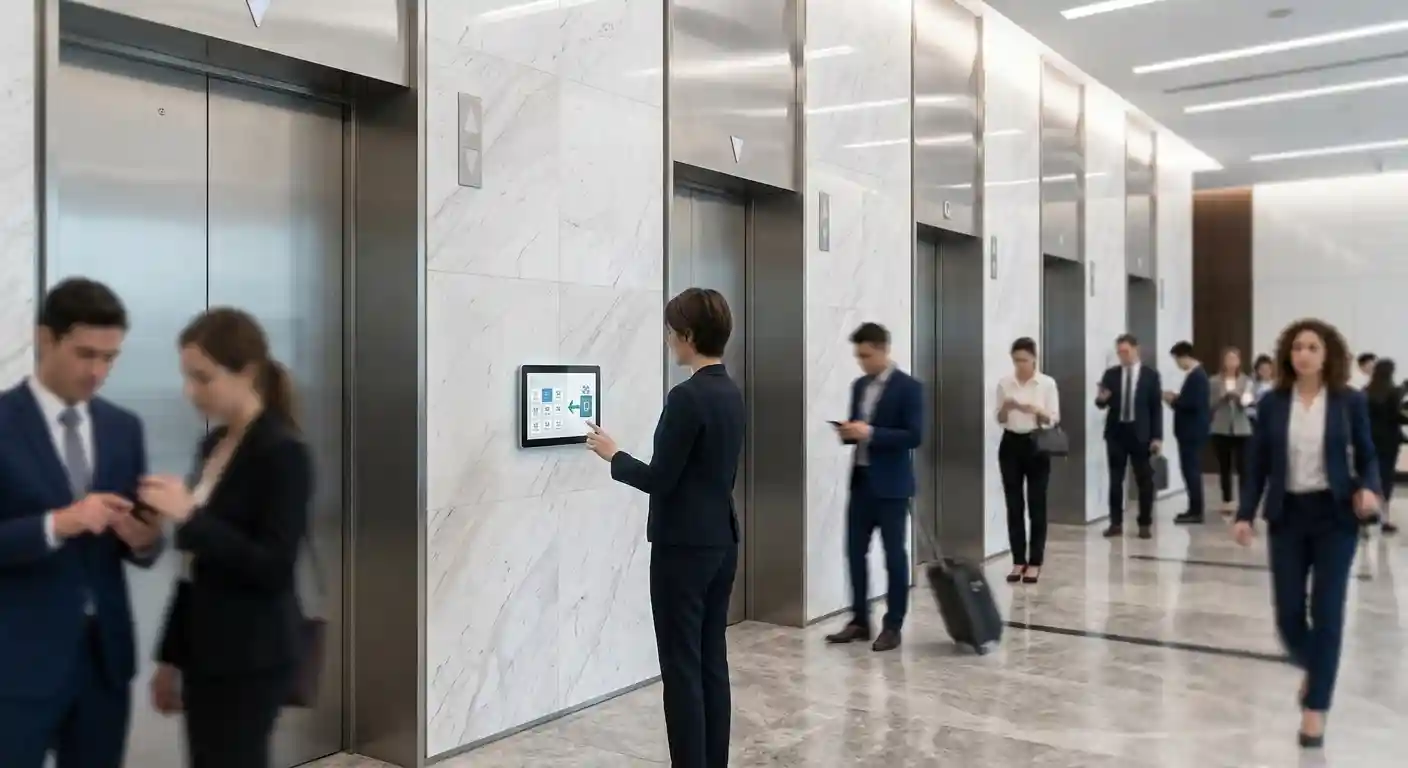
A destination control terminal is typically installed in the elevator lobby before passengers enter the elevator. Instead of pressing a floor button inside the cabin, users first select their destination floor on the terminal. The system then automatically assigns the most suitable elevator, reducing waiting time and improving traffic efficiency during peak hours.
They are employed extensively in office buildings, hotels, hospitals, and airports, along with other facilities with high passenger volumes, where effective passenger movement is crucial.
Destination control terminals are available in a variety of display sizes, typically from 7 to 10.1 inches, allowing system designers to select the most suitable interface for different building environments. Recommended display features include:
- PCAP multi-touch screen
- IPS wide viewing angle
- High-resolution & high-brightness display
- Durable cover glass with optional anti-glare treatment
- Fast touch response
Because these terminals serve as the first interaction point between passengers and the elevator system, display quality and responsiveness directly influence the user experience.
2. Landing Operating Panel (LOP)
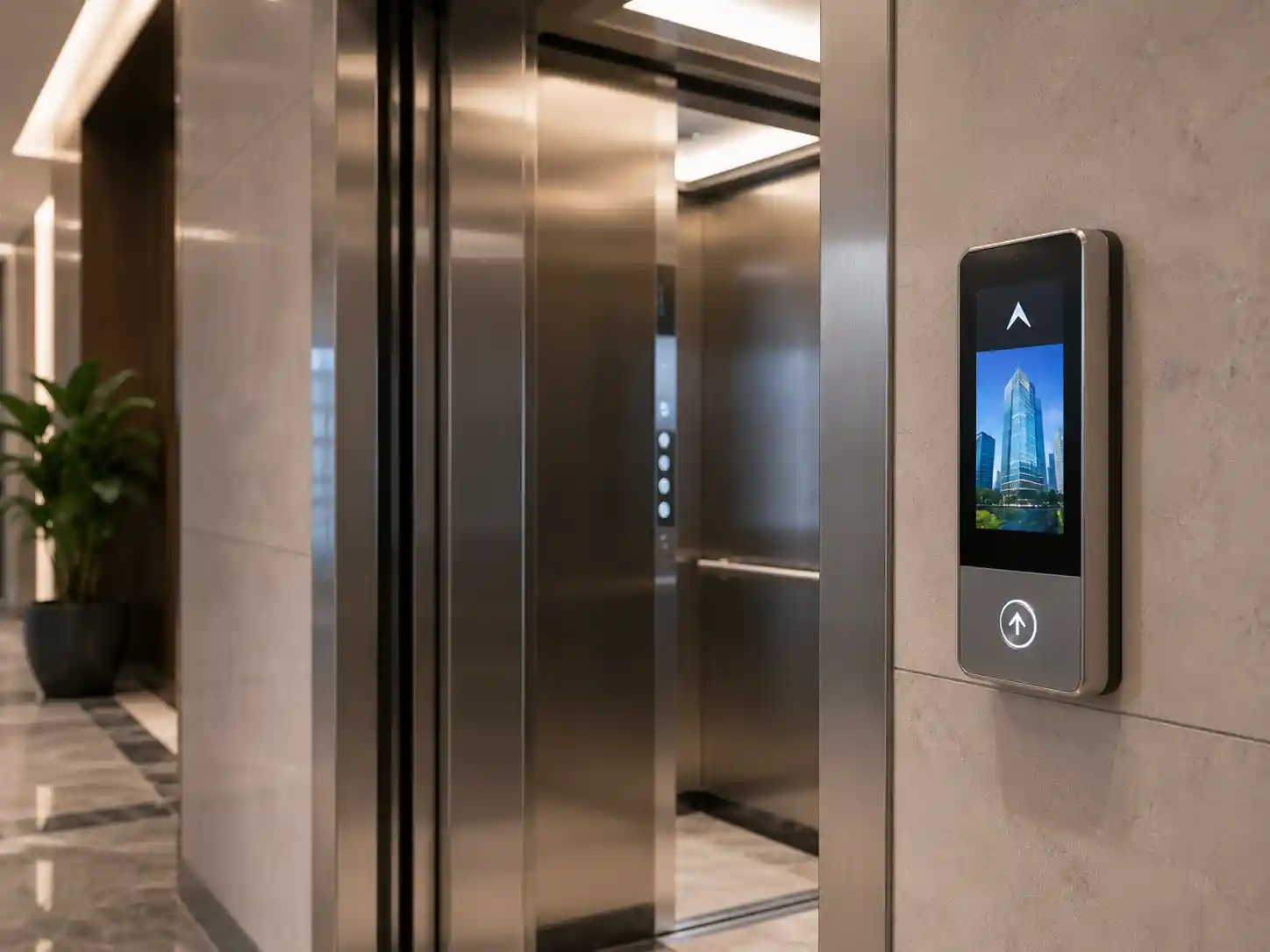
A Landing Operating Panel (LOP) is located next to the elevator door on each floor. Its primary function is to allow passengers to call the elevator and display basic operating information before the elevator arrives.
Compared with destination control terminals, the LOP usually uses smaller display modules, with common sizes ranging from 3.5 inches to 7 inches.
Typical information displayed includes:
- Current floor number
- Up or down direction
- Elevator operating status
- Maintenance or service notifications
Since LOP displays are viewed from different angles by multiple passengers, a wide viewing angle is highly desirable. Industrial TFT LCD displays with IPS technology provide clear visibility from various positions while maintaining excellent color consistency.
Other recommended features include:
- Compact design
- Long service life
- Low power consumption
- High reliability
- Easy integration with elevator control systems
Modern buildings are designed to be increasingly sophisticated, and to enhance the clean look and flexibility of information presentation, many manufacturers have started to substitute the conventional LED indicator with the compact TFT LCD modules.
3. Cab Display and Elevator Monitor
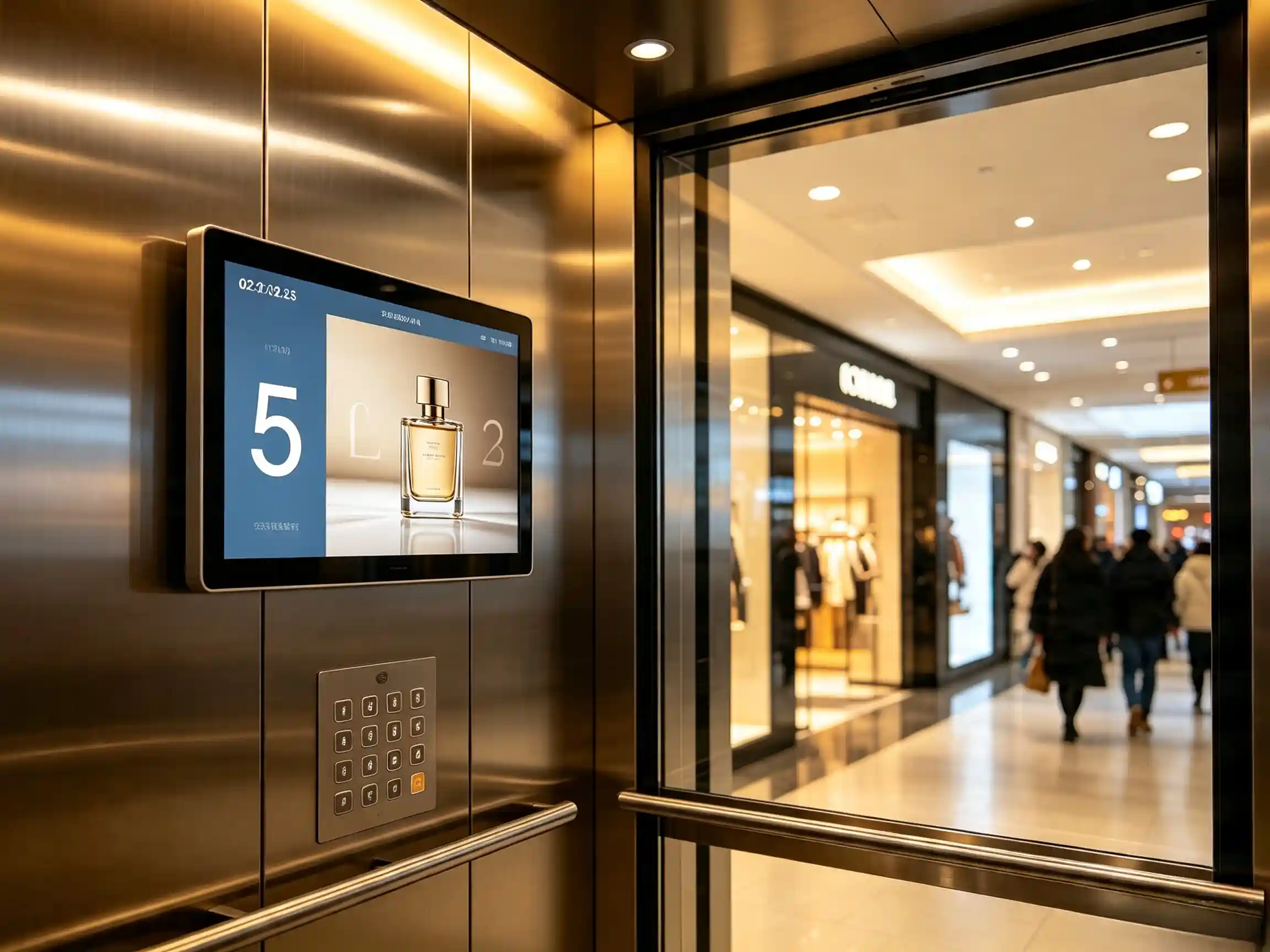
The display in the elevator cab provides passenger with the real-time travelling information during the trip inside the elevator. Unlike traditional displays that only show floor numbers, modern cabin displays serve as multimedia information centers.
These displays are commonly installed above the elevator door, on the cabin wall, or integrated with the cabin operating panel (COP), depending on the elevator design. Typical display sizes range from 7 inches to 15.6 inches, making them suitable for both residential and commercial elevator applications.
In addition to floor numbers and travel direction, today’s elevator monitors can display:
- Date and time
- Weather information
- Building announcements
- Emergency notifications
- Advertising content
- Company information
- Promotional videos
- Public service messages
For commercial buildings, hotels, shopping malls and hospitals, these displays are also useful for digital signage and information broadcasting.
Recommended features include:
- IPS wide viewing angle
- High brightness for improved readability
- Long-life LED backlight
- Excellent color performance
- Multimedia playback capability
- Stable 24/7 operation
Today, display solutions for passenger information and multimedia complement each other, thereby enhancing communication, user experience and building intelligence, and generating added value for the owner.
Key Features of an Industrial TFT LCD for Elevator Display
Selecting the right industrial TFT LCD is essential for building a reliable and user-friendly elevator display system. Whether installed in a destination control terminal, landing operating panel, or in-car display, industrial TFT LCD modules should deliver excellent visibility, long-term reliability, and stable performance.
Wide Viewing Angle for Better Visibility
Elevator displays are viewed from different positions and heights. IPS TFT LCD panels offer viewing angles of up to 178°, which means that floor information, directions and announcements will be visible from nearly any angle. This will make it easier to read and enhance the passenger experience.
High Brightness for Glass and Outdoor Elevators
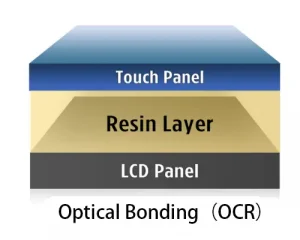
For glass elevators or installations exposed to strong ambient light, high-brightness displays of 700–1000 nits or more help maintain excellent visibility. Technologies such as optical bonding and anti-glare treatments further improve readability by reducing reflections.
Reliable 24/7 Operation
In commercial buildings, hospitals and office towers, elevators run around the clock. Industrial TFT LCD modules provide long-life LED backlights, performance stability and availability for extended product life, thereby lowering maintenance expenses over product life.
Lift Touch Screen Solutions with PCAP Technology
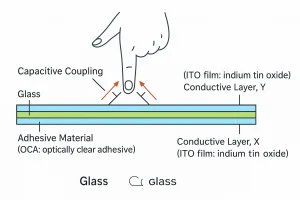
Modern lift touch screen solutions use PCAP technology to provide fast response, excellent durability, and intuitive operation. Combined with optical bonding, they deliver a premium user experience for destination control terminals and other interactive elevator interfaces.
Custom Industrial TFT LCD Solutions for Elevator Display
Each elevator project is specific to a particular need. In addition to standard display modules, customized TFT LCD solutions enable manufacturers to enhance system integration, product appearance and user experience.
Flexible Customization for Different Elevator Applications
Rocktech provides a wide range of customization TFT services, including:
- Display sizes from 1.0″ to 15.6″
- High-brightness solutions
- PCAP touch integration
- Cover Glass customization
- Optical Bonding
- SPI, RGB, MIPI, LVDS, and HDMI interfaces
- FPC customization
- Logo printing and mechanical design support
These flexible options enable manufacturers to create reliable elevator display solutions tailored to different installation environments and product designs.
Why Choose Rocktech for Elevator Display Projects
Rocktech has been manufacturing industrial displays for more than 15 years and is dedicated to providing reliable display solutions for long-life industrial use.
We offer:
- Extensive experience in industrial TFT LCD solutions
- Stable product quality and strict quality control
- Long product lifecycle and reliable supply
- Fast engineering support for custom projects
- Comprehensive ODM & OEM development services
- Professional technical support from concept to mass production
Whether you’re developing a destination control terminal, a landing operating panel, or an in-car display, Rocktech is ready to support your project with reliable products and responsive engineering services.
Frequently Asked Questions About Elevator TFT LCD Displays
Why are TFT LCD displays used in modern elevator systems?
TFT LCD displays provide high-resolution graphics, vivid colors, wide viewing angles, multimedia support, and optional touch functionality. Compared with traditional LED indicators, they can display floor information, operating status, announcements, emergency instructions, advertisements, and other dynamic content.
Where are TFT LCD displays commonly installed in elevators?
TFT LCD displays are commonly used in destination control terminals in elevator lobbies, landing operating panels next to elevator doors, and passenger information displays inside elevator cabins. Each location may require a different screen size, brightness level, and touch configuration.
What display size is suitable for an elevator application?
Destination control terminals commonly use 7-inch to 10.1-inch displays, while landing operating panels typically use 3.5-inch to 7-inch modules. Elevator cabin displays generally range from 7 inches to 15.6 inches, depending on the installation space and the amount of information shown.
What features should an industrial TFT LCD for elevators have?
Important features include a wide viewing angle, high brightness, a long-life LED backlight, stable 24/7 operation, low power consumption, and reliable integration with the elevator control system. Interactive terminals may also require PCAP touch, durable cover glass, anti-glare treatment, and optical bonding.
When does an elevator display require a high-brightness screen?
High-brightness screens are recommended for glass elevators and other installations exposed to strong ambient light. Displays rated at approximately 700 to 1,000 nits or higher, combined with anti-glare treatment or optical bonding, can improve readability and reduce reflections.