Why Anti Glare vs Anti Reflective Matters in Display Cover Glass Design
In modern display systems, especially in industrial TFT LCD applications, screen readability under different lighting conditions is a critical performance factor. From an outdoor kiosk to a factory HMI panel or a transport system, a strong ambient light creates a challenge of reflection, leading to poor visibility and user experience.
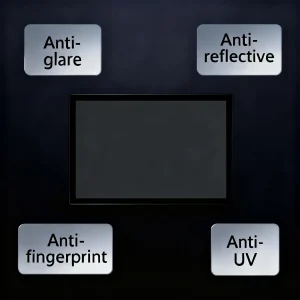
To solve this problem, manufacturers usually apply anti glare (AG) and anti reflective (AR) surface treatment to the cover glass of a display. Both of these solutions can be easily confused, but they function in a very different way and provide different optical effects.
It is important to know about the difference between anti glare and anti reflective to choose the right display solution depending on the brightness, cost, durability and environment in which it will be used.
What is Anti Glare Display Technology?
Definition and working principle of anti glare display
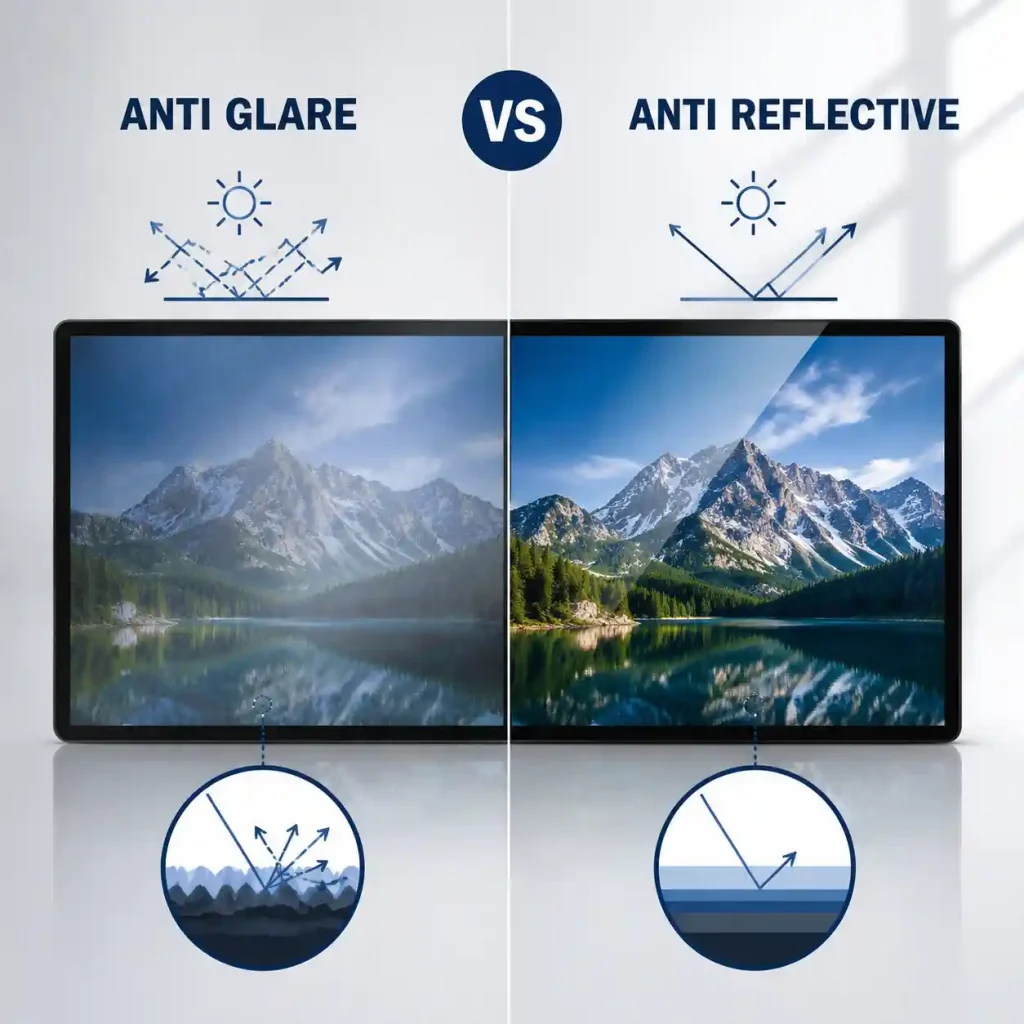
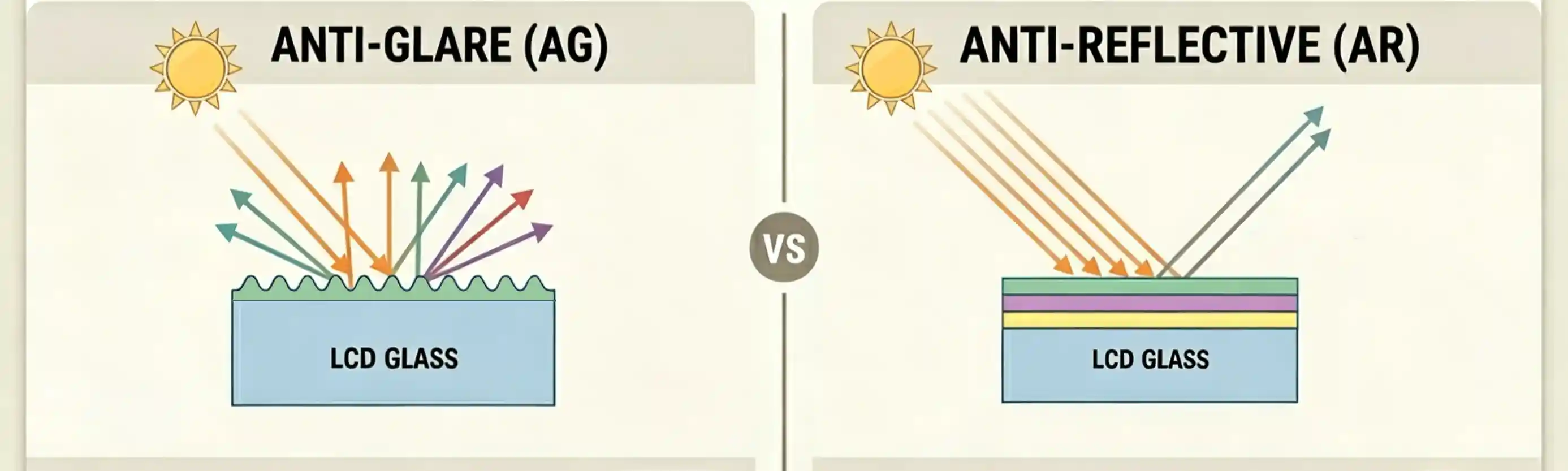
Anti glare treatment is designed to reduce visual discomfort caused by strong reflected light. Instead of eliminating reflection, it spreads the reflected light so that it becomes less concentrated and less disturbing to the human eye.
AG surface treatment process used in display cover glass
Anti glare treatment is typically achieved through:
- Chemical etching of the glass surface
- Coating-based matte finishing
- Controlled micro-rough surface structure
This micro-structured surface changes the specular reflection into the diffuse reflection.
Advantages of anti glare in industrial TFT LCD applications
- Effective in bright or outdoor environments
- Lower production cost compared to optical coatings
- High durability and scratch resistance
- Stable mass production process
Limitations of anti glare in high clarity requirements
- Slight reduction in sharpness
- Lower contrast compared to clear glass
- May introduce a “frosted” appearance
- Not ideal for ultra-high-resolution displays
What is Anti Reflective Display Technology?
Definition of anti reflective display
Anti reflective treatment reduces the amount of reflected light instead of scattering it. It improves visibility by minimizing surface reflection through optical interference principles.
Optical coating technology used in display cover glass (AR coating)
AR technology typically uses:
- Multi-layer thin film coatings
- Optical interference design
- Precise refractive index control
These layers reduce the reflection at the air-glass interface.
Advantages of anti reflective for high-end application
- Higher display clarity and transparency
- Improved contrast and color accuracy
- Premium visual appearance
- Better readability in controlled lighting environments
Challenges and cost considerations of anti reflective solutions
- Higher manufacturing cost
- More complex production process
- Coating durability depends on material quality
- Requires precise optical design and control
Anti Glare vs Anti Reflective: Key Differences in Display Cover Glass
Both technologies are focused on the issue of readability, but very different approaches and look. There are some fundamental differences between the two, and they’re highlighted in the table below:
Technical and Optical Comparison
| Feature | Anti Glare (AG) | Anti Reflective (AR) |
|---|---|---|
| Working principle | Diffuses reflected light | Reduces reflected light |
| Surface method | Etching / matte treatment | Optical thin-film coating |
| Reflection behavior | Soft and scattered reflection | Lower total reflection |
| Image clarity | Slightly reduced sharpness | High clarity and transparency |
| Visual appearance | Matte / frosted effect | Clear / glass-like effect |
| Cost level | Lower | Higher |
| Manufacturing complexity | Mature and simple | Complex and precise |
Visual performance comparison: clarity, contrast, and reflection behavior
In real applications:
- AG displays prioritize comfort in bright environments
- AR displays prioritize image clarity and premium visual quality
AG reduces glare by scattering light, making it easier on the eyes in uncontrolled lighting conditions. AR improves readability by reducing the amount of reflected light, making the image appear more “transparent”.
Cost and manufacturing complexity comparison
From a production perspective:
- AG is widely adopted due to its low cost and high yield rate
- AR requires optical-grade coating processes, increasing both cost and production difficulty
For large-scale industrial TFT LCD applications, AG is often preferred unless high visual performance is required.
Durability and environmental suitability for industrial TFT LCD
- AG surfaces are generally more resistant to environmental wear
- AR coatings may degrade depending on coating quality and usage conditions
- AG is more suitable for harsh industrial environments
- AR is better suited for controlled or high-end environments
How to Choose Between Anti Glare Display and Anti Reflective Display
Selecting between AG and AR depends heavily on application requirements, budget, and visual expectations.
When to choose AG for industrial TFT LCD applications
Anti glare display is recommended when:
- The device is used in outdoor or high-brightness environments
- Cost efficiency is a priority
- Durability is more important than ultra-high clarity
- The application includes industrial HMI, kiosks, or factory equipment
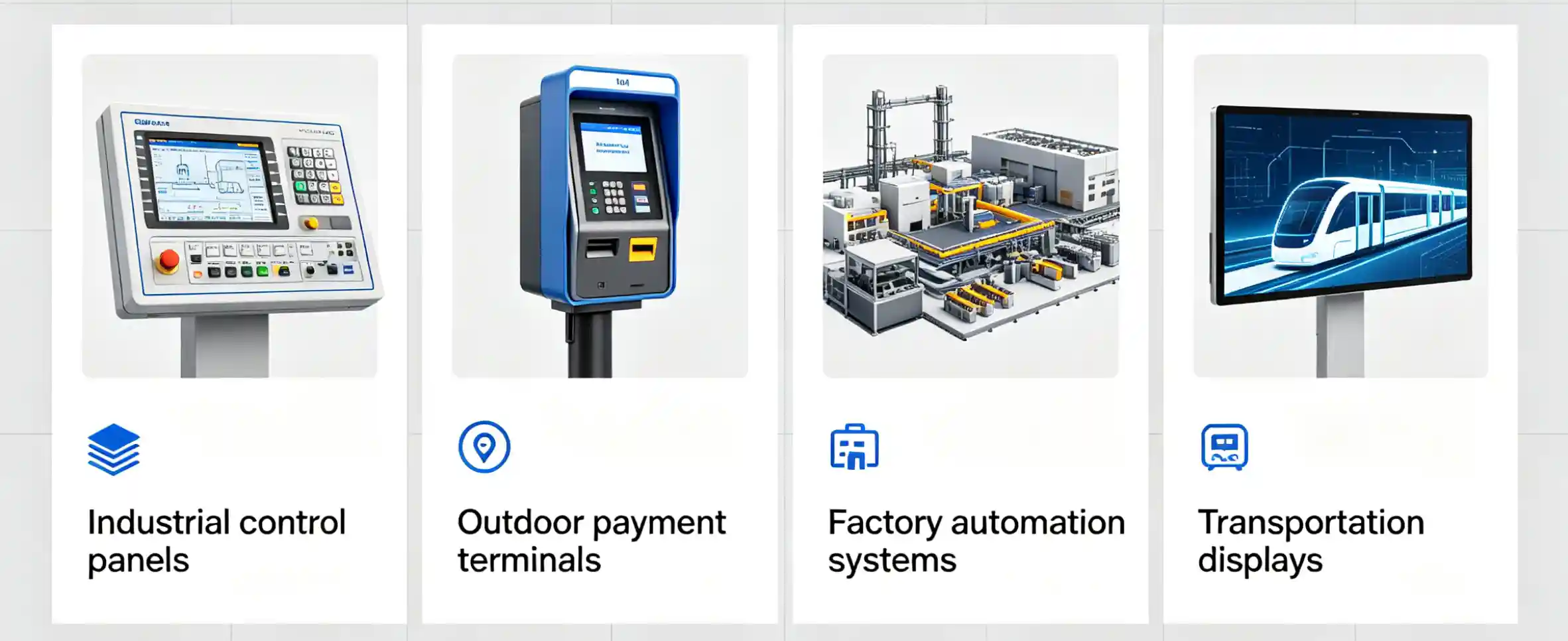
Typical use cases:
- Industrial control panels
- Outdoor payment terminals
- Factory automation systems
- Transportation displays
When to choose AR for premium display cover glass
Anti reflective display is preferred when:
- High image clarity and color accuracy are required
- The product targets high-end markets
- User experience and visual quality are critical
- The environment has controlled lighting conditions
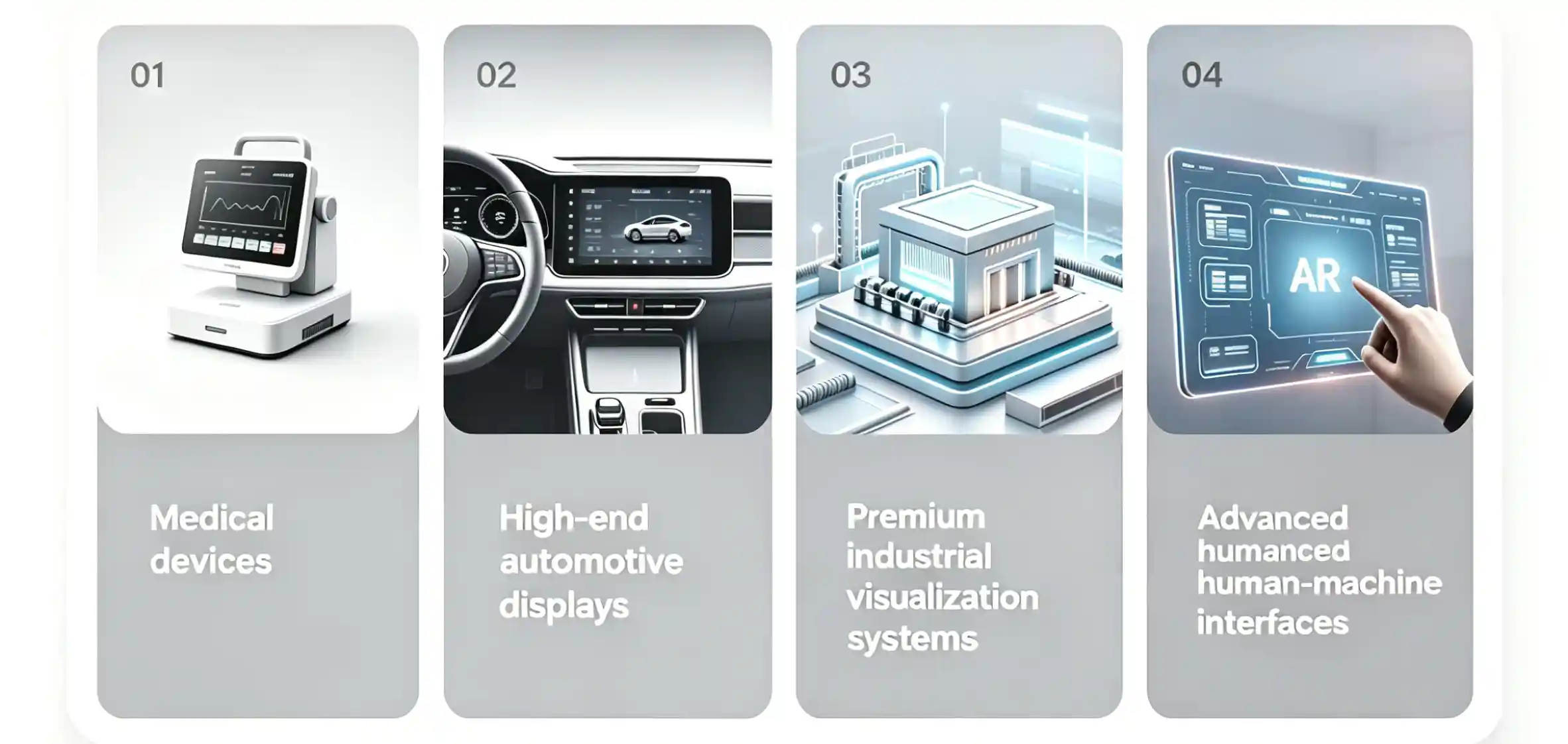
Typical use cases:
- Medical devices
- High-end automotive displays
- Premium industrial visualization systems
- Advanced human-machine interfaces
AG, AR, and AGAR hybrid solutions in display cover glass design
In some advanced applications, a hybrid solution is used:
- AGAR (Anti Glare + Anti Reflective) combines both technologies
- It reduces glare while also lowering reflection
- Provides balanced performance in extreme lighting environments
However, AGAR solutions come with:
- Higher cost
- More complex manufacturing process
- Lower yield compared to single treatments
Customization options for industrial TFT LCD projects
For industrial TFT LCD manufacturers, display cover glass can be customized in multiple ways:
- AG haze level adjustment
- AR coating intensity control
- Thickness customization
- Surface hardness enhancement (e.g., anti-scratch coating)
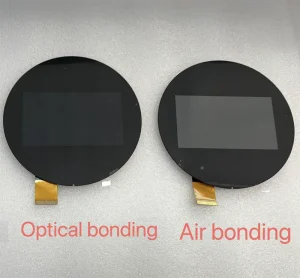
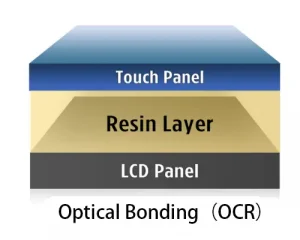
- Integration with touch panels (CTP bonding)
Choosing the right combination ensures optimal performance for specific applications.
Summary: AG vs AR in Industrial TFT LCD Display Cover Glass
Key takeaways of AG vs AR technologies
- Anti glare display reduces glare by scattering reflected light
- Anti reflective display reduces reflection through optical coating
- Both improve visibility but use different physical principles
In summary:
- Choose AG (anti glare) for cost-sensitive, rugged industrial environments
- Choose AR (anti reflective) for high-end applications requiring superior visual clarity
- Consider AGAR hybrid solutions for extreme lighting conditions with higher performance requirements
For industrial TFT LCD projects, the right choice depends on balancing optical performance, cost, and environmental conditions.
Frequently Asked Questions About Anti-Glare and Anti-Reflective Glass
What is the difference between anti-glare and anti-reflective glass?
Anti-glare (AG) glass uses a micro-textured or matte surface to scatter reflected light, making glare less distracting. Anti-reflective (AR) glass uses optical thin-film coatings to reduce the total amount of reflected light, providing greater transparency, contrast, and image clarity.
Does anti-glare treatment reduce display clarity?
Anti-glare treatment can slightly reduce image sharpness and contrast because its textured surface diffuses light. It may also give the display a subtle matte or frosted appearance. The effect depends on the selected haze level and surface treatment.
When should an anti-glare display be used?
Anti-glare displays are suitable for outdoor equipment, industrial HMIs, payment terminals, factory automation systems, and transportation displays. AG treatment is often selected when durability, glare reduction, and cost efficiency are more important than maximum image clarity.
When is anti-reflective glass the better choice?
Anti-reflective glass is preferable when high transparency, accurate colors, strong contrast, and a premium visual appearance are required. Typical applications include medical devices, high-end automotive displays, advanced HMIs, and visualization systems used in controlled lighting environments.
What is an AGAR display cover glass solution?
AGAR combines anti-glare and anti-reflective treatments to scatter distracting glare while also reducing total surface reflection. It can provide balanced performance in challenging lighting conditions, although it generally costs more and requires a more complex manufacturing process than AG or AR treatment alone.