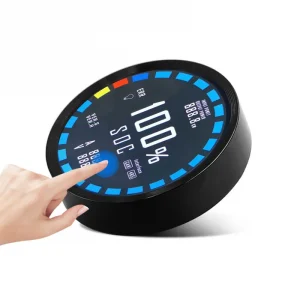
Round TFT Displays
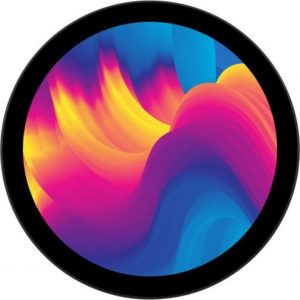
Round TFT displays are becoming increasingly popular in modern user interface design, especially in smart home systems and rotary control panels. Unlike traditional rectangular LCD modules, a round TFT display delivers a more natural, dial-like visual experience, making it ideal for applications that require circular UI elements such as knobs, gauges, thermostats, and smart control hubs.
In intelligent home environments, product design is shifting from purely functional interfaces to more aesthetic and intuitive interaction models. A circular display fits seamlessly into rotary encoders and multifunction control knobs, allowing users to adjust lighting, temperature, audio, and security settings with a smooth, analog-inspired motion while retaining the benefits of a full-color graphical interface.
Technically, round TFT LCD modules are based on the same IPS or TFT active-matrix technology used in standard panels, but with customized glass cutting and driver IC integration. Most round TFT displays are available in sizes such as 1.28 inch, 1.54 inch, 2.1 inch, 2.8 inch, and even 3.4 inch, with resolutions optimized for circular UI rendering. Common interfaces include SPI, RGB, and MIPI DSI, depending on system performance requirements.
For smart home applications, round TFT displays are frequently paired with embedded SoCs or microcontrollers running Linux or RTOS systems. When integrated into a smart knob display, they can dynamically render menus, animation transitions, temperature rings, volume arcs, or device status indicators. IPS technology is often preferred to ensure wide viewing angles, consistent brightness, and color stability from different installation angles.
Beyond smart homes, round TFT LCD displays are also used in wearable devices, industrial controllers, automotive dashboards, and medical instruments where circular information presentation enhances readability and interaction efficiency.
Why Round TFT Displays Are Ideal for Smart Knob Interfaces
One of the most important advantages of round TFT displays in smart home control panels is ergonomic consistency. Human interaction with knobs is naturally circular. When a round display is embedded beneath or inside a rotary encoder, the digital UI aligns perfectly with the physical movement. This eliminates the visual mismatch commonly seen when rectangular displays are used in circular products.
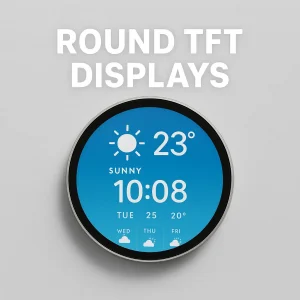
In smart lighting systems, for example, a round TFT screen can display brightness levels as a circular progress ring. In HVAC controllers, temperature adjustments can be shown as a rotating gradient arc. For audio control hubs, volume levels can be visualized in real time as dynamic radial animations. These circular UI elements are intuitive and reduce user learning time.
From a hardware integration perspective, round TFT LCD modules require careful mechanical design. The PCB layout, FPC routing, and backlight uniformity must be optimized to avoid uneven illumination along the circular edge. High-quality modules use precision backlight diffusion structures and edge-lighting techniques to maintain consistent brightness across the entire active area.
Another key factor is touch integration. Many round TFT displays support capacitive touch (CTP) overlays with circular sensor patterns. In advanced smart knob designs, the display can combine rotary mechanical input with multi-touch gesture support, enabling both rotational and tap-based interactions within the same interface.
As smart home ecosystems continue to evolve, the demand for compact, visually refined, and highly interactive display solutions is increasing. Round TFT displays provide a unique balance between aesthetic design, functional clarity, and system integration flexibility. For designers building next-generation smart control panels, thermostat interfaces, or intelligent rotary modules, circular TFT technology offers both visual impact and technical reliability.