Custom CTP (Custom Capacitive Touch Panel)
What Is a Custom CTP?
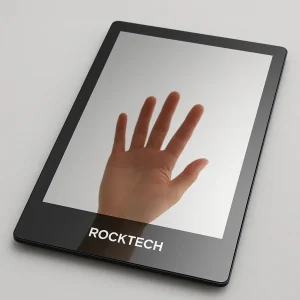
A Custom CTP (Custom Capacitive Touch Panel) refers to a projected capacitive touch solution that is specifically designed and engineered to match a particular product structure, display size, and application requirement. Unlike standard off-the-shelf touch panels, a custom CTP is developed around real project constraints such as enclosure dimensions, cover glass thickness, controller compatibility, and environmental conditions.
In industrial and embedded systems, customization is often necessary because the mechanical structure, TFT LCD module, and main control board are rarely identical across projects. A custom capacitive touch panel allows precise alignment with the LCD active area, optimized sensor routing, and tailored firmware tuning. This results in better optical performance, improved reliability, and more consistent touch sensitivity.
Custom CTP solutions are widely used in industrial control panels, medical equipment, smart home interfaces, HMI terminals, self-service kiosks, and embedded Android or Linux SBC platforms. By designing the touch panel as part of the system rather than as a separate accessory, engineers can avoid integration issues and reduce long-term maintenance risks.
Key Elements of Custom CTP Design
1. Sensor and Controller Selection
The core of any capacitive touch panel is the sensor structure and its touch controller IC. For custom CTP projects, engineers must consider signal routing density, mutual/self-capacitance configuration, EMI resistance, and firmware stability. Controller compatibility with the target system (I²C, USB, HID over USB) should be verified early, especially for Android or Linux-based embedded boards.
2. Cover Glass and Surface Treatment
Custom CTP designs allow flexibility in cover glass thickness, shape, and surface treatment. Thicker glass improves impact resistance and IK rating, while thinner glass increases sensitivity. Surface treatments such as AG (anti-glare), AR (anti-reflection), and AF (anti-fingerprint) can be added to improve outdoor readability and user experience. Silk printing, logo integration, and decorative borders are also common customization options.
3. Optical Bonding Compatibility
Many custom CTP projects involve optical bonding to TFT LCD modules using OCA or OCR. Optical bonding enhances contrast, reduces internal reflection, and improves vibration resistance. When bonding is planned, the touch panel design must account for lamination tolerance, alignment precision, and long-term adhesive stability.
4. Environmental Adaptation
Industrial applications may require glove operation, water rejection capability, or operation in high-EMI environments. Custom firmware tuning can optimize sensitivity thresholds and noise filtering. Additional shielding layers and grounding strategies are often incorporated into the sensor layout to improve stability in electrically noisy environments.
5. Mechanical and FPC Design
The FPC (Flexible Printed Circuit) position, connector type, and bending direction must align with the system layout. A poorly positioned FPC can complicate assembly or reduce production yield. Custom CTP development ensures the mechanical structure supports both easy integration and scalable manufacturing.
Why Custom CTP Matters in Product Development
A well-engineered custom CTP is not only about touch responsiveness; it directly affects product durability, system stability, and long-term brand perception. Off-the-shelf panels may work in prototypes, but production systems benefit from tailored sensor patterns, optimized firmware, and structure-level integration.
By treating the touch panel as a core subsystem rather than an accessory, manufacturers can reduce integration risks, improve field reliability, and achieve a more refined user interface experience in embedded and industrial devices.