Introduction: What LCD Color Problem met in a TFT LCD Display
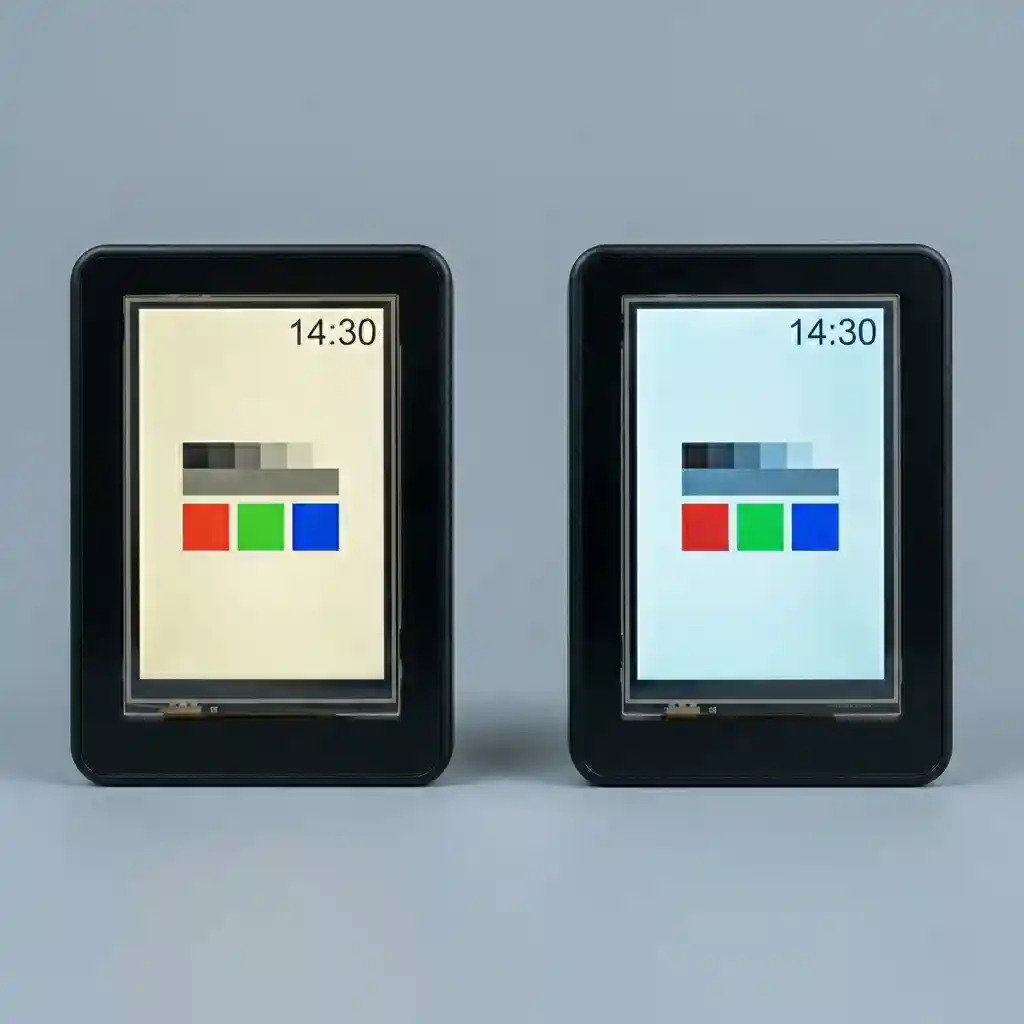
One of the most frequently mentioned issues in the application of TFT LCD display is LCD color problems, particularly in industrial, medical and commercial applications. Common problems reported by users include a yellowish display of the LCD, color change of the screen, or variation of color among different batches.
In most instances, these phenomena are directly assumed to be quality defects. But technically speaking, the color change in LCD is an effect at the system level and it depends on several factors such as the nature of the back light, optical materials, electrical calibration and manufacturing tolerances.
Understanding the real mechanism behind LCD color problems is essential for correctly evaluating display quality, ensuring a high-quality display performance, and avoiding misjudgment during product development or mass production.
The way a TFT LCD Display Generates Color? What’s the Definition?
Unlike self-emissive technologies such as OLED, a TFT LCD display relies entirely on a backlight system to generate visible images. The liquid crystal layer does not emit light; it is only the modulator of light going through it.
1. LCD Structure Overview
Most TFT LCD displays have three large components: the LED backlight unit, the liquid crystal panel, and the color filter layer. The backlight is a source of a wide-spectrum white light, and the liquid crystal layer regulates the light transmission on a pixel scale. The color filters then divide the light into red, green and blue subpixels.
Since the system uses backlight as the basis of brightness and color, any difference in the performance of the backlight will have a direct impact on the perceived final color.
2. Backlight Influence on Color
The spectral characteristics of LED backlight determine the baseline white point of the display. Even small differences in LED wavelength distribution or intensity can result in noticeable color differences in the final TFT LCD display.
Color Temperature and LCD Yellow Tint Perception
One of the most crucial aspects of LCD color perception is the color temperature. It is quantified in Kelvin (K) and is used to depict the visual appearance of white light as being warm (yellowish) or cool (bluish).
Reduced color temperatures (approximately 5000K-6500K) result in a warmer white that is a little bit yellowish to the human eye. The greater the values (greater than 8000K), the more cooler and bluish it will appear. When a TFT LCD display moves towards the lower color temperature, users may easily notice an LCD yellowish problem, although the display may still be operating within spec.
Color temperature in industrial use is normally determined depending on the product needs. Various applications can deliberately choose warmer or colder white points based on usability and environmental factors.
Color Specification, Tolerance Range, and Engineering Standards
In display manufacturing, color is not defined as a single fixed point. Instead, it is specified using chromaticity coordinates with defined tolerance ranges, typically expressed as Min, Typ, and Max values. All TFT LCD display products are evaluated based on these predefined limits. As long as the measured color coordinates fall within the specified range, the product is considered compliant. This implies that, a little color difference between units does not necessarily imply a defect. Instead, it reflects normal manufacturing dispersion within engineering tolerance.
From a practical engineering perspective, achieving absolute identical color across all production units is not feasible due to inherent variations in materials and processes. Therefore, the industry focuses on controlling variation within acceptable limits rather than eliminating it completely.
Physical Causes of LCD Color Shift and Yellow Tint
The variation of LCD colors is highly dependent on the physical and material level in the backlight system and optical system.
LED Backlight Binning Variation
LEDs used in TFT LCD displays are sorted into different bins based on brightness and color characteristics. Even within the same product model, different LED bins may introduce slight differences in spectral output, leading to LCD color variation.
LED Aging Effects
LED Backlights naturally degrade over time. This process of aging tends to make the display warmer or more yellowish with a gradual transition to lower color temperature.
Optical Film Aging
Optical components such as polarizers, diffuser films, and light guide plates can degrade under heat and light exposure. This degradation can affect light transmission efficiency and contribute to LCD yellow tint over time.
Optical Bonding Material Yellowing
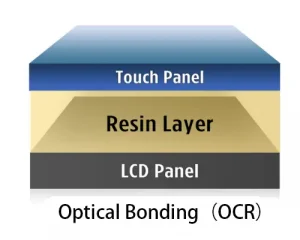
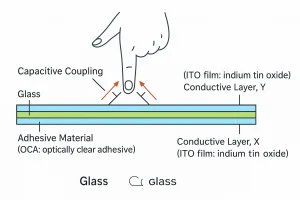
The adhesives used in optically bonded displays like OCA or LOCA can turn yellow with prolonged exposure to heat or UV. This effect is capable of affecting the perceived color of the TFT LCD display, particularly when used in high-brightness.
Material Batch Variation
Even small differences in raw materials between production batches can accumulate and lead to visible color differences between displays, particularly in large-scale manufacturing.
Electrical Calibration Factors Affecting LCD Color Performance
Gamma Correction
Gamma correction defines the relationship between input signal and output brightness. Improper gamma settings can result in incorrect grayscale balance and affect perceived color accuracy.
VCOM Adjustment
VCOM voltage regulates stability of liquid crystal. Improper VCOM tuning can cause instability in the display and indirect color discrepancy.
White Balance Calibration
White balance calibration is a critical step in TFT LCD display production. It ensures that red, green, and blue channels are properly balanced to achieve neutral white.
Calibration vs Hardware Issues
Not all color issues originate from hardware defects. In many cases, improper calibration during production can lead to incorrect color output, which can be corrected through tuning processes.
Viewing Angle Effects on LCD Color Perception
Viewing angle is another factor that affects perceived LCD color consistency, especially in certain panel types.
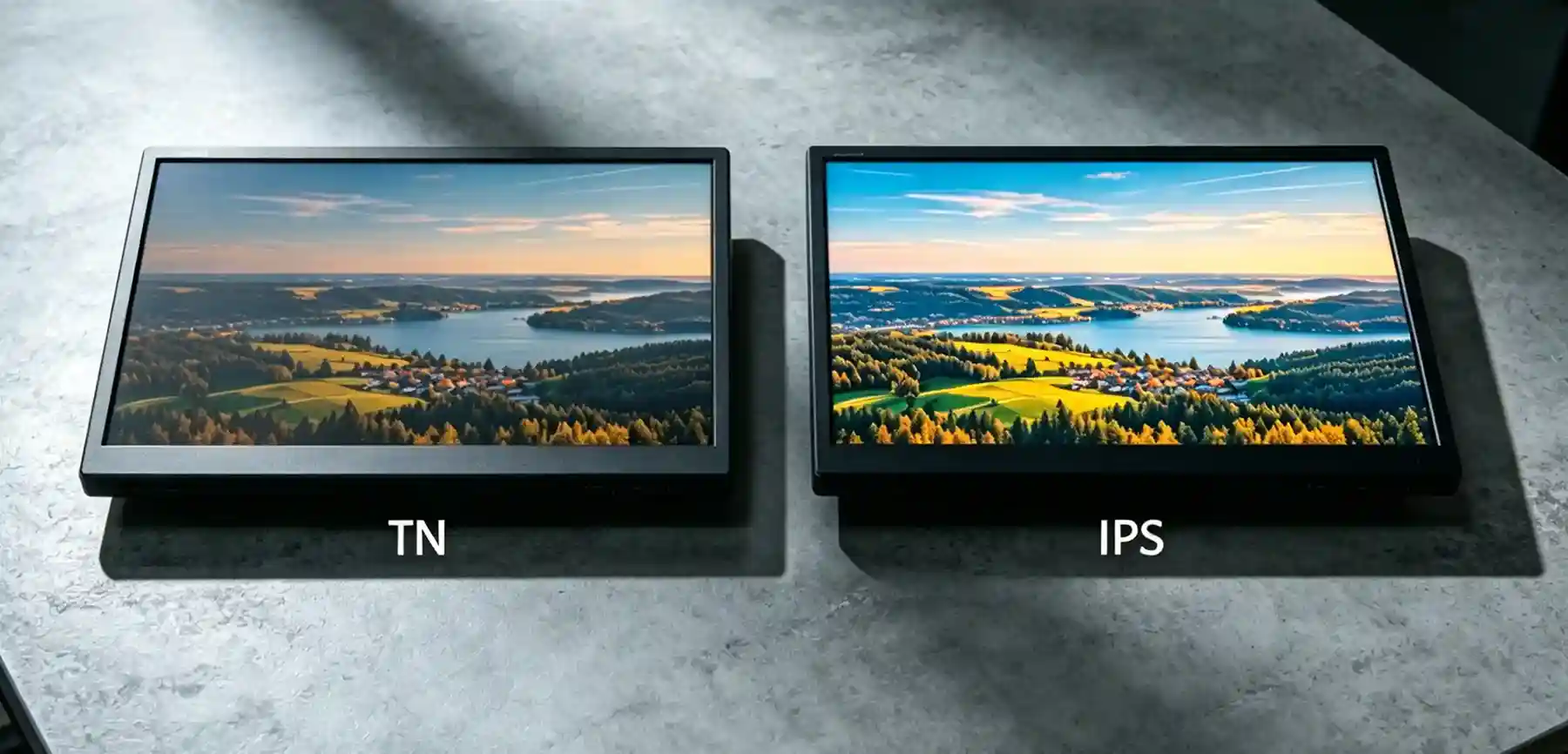
TN vs IPS Panels
TN panels have more apparent color shift in viewing between angles whereas IPS panels have superior color stability and large viewing angles.
Perception vs Actual Color Issue
In many cases, users may interpret viewing-angle-related color shift as a defect, even though the display is operating normally within its design characteristics.
Why LCD Color Difference Appears Between Different Production Batches
In practice, customers can observe that the color of the TFT LCD display in a certain batch of production is slightly different in another. This is commonly referred to as LCD yellowish (warmer) or a bluish look (cold).
Engineering-wise, color difference does not necessarily constitute a quality defect. The most important is the measurement of the chromaticity coordinates is within the range of specification tolerance.
Color Difference Must Be Evaluated Against Specification Limits
In TFT LCD display specifications, color is defined by chromaticity coordinates with Min, Typ, and Max limits. These limits represent the acceptable tolerance range for mass production.
As long as the display color falls within this defined range, the product is considered compliant and no impact to the performance. Only when the color deviation exceeds the specified tolerance does it become a non-conforming product.
LED Bin Variation Across Batches
LED backlights are sourced in production lots, and each lot belongs to specific brightness and chromaticity bins. Small spectral differences between bins can lead to visible color variation between batches, while still remaining within specification.
Panel and Optical Material Lot Differences
Other optical materials such as polarizers, diffuser films, light guide plates among other are also distributed in varying production lots. These differences in materials can build up and influence the perceived white point of TFT LCD display.
Why Zero Color Deviation Is Not Technically Achievable
Due to the inherent characteristics of TFT LCD panel manufacturing and LED chip production processes, achieving absolute zero color deviation across different production batches is not technically feasible in mass production.
Therefore, the industry standard is not to eliminate all color differences, but to control them within acceptable specification limits through process control, bin management, and calibration.
Engineering Methods to Control LCD Color Consistency
To ensure stable color performance in TFT LCD display products, manufacturers implement multiple control methods throughout the production process.
| Control Method | Purpose | How It Improves LCD Color Consistency |
|---|---|---|
| LED Bin Selection | Reduce backlight spectral variation | Careful selection and matching of LED bins minimizes differences in wavelength and brightness, reducing color variation between TFT LCD display units. |
| Color Temperature Standardization | Define a consistent visual white point | Setting a clear target color temperature ensures all units are tuned to the same warm/cool tone reference. |
| Aging and Pre-Conditioning | Stabilize LED performance before calibration | Pre-aging allows LED output to settle, reducing early-life color drift that can cause LCD yellowish or color shift. |
| Calibration Processes | Fine-tune grayscale and white balance | White balance and gamma calibration correct channel differences and ensure accurate color output at production level. |
| Long-Term Quality Control | Maintain consistency across mass production | Ongoing process monitoring and QC checks keep LCD color performance within specification across large production batches. |
Conclusion: LCD Color Problem as a System-Level Engineering Result
The issue of LCD colors is not due to one specific cause and a combination of optical, electrical, and material factors in the TFT LCD display system. In the engineering practice, the aim is not to obtain a perfect color uniformity, but to manage variation within reasonable tolerance margins and ensure a high-quality display performance, which remains stable and reliable. Proper knowledge of the color behavior of LCDs can be used to prevent misinterpretation and make improved decisions on the choice of displays and the design of products.
FAQ
Why does a TFT LCD display sometimes look yellowish?
A TFT LCD display may look yellowish when the backlight color temperature is lower, when LED bins vary between batches, or when optical materials age over time. A slightly warmer white point does not always mean the display is defective, as long as the measured chromaticity values remain within the specified tolerance range.
Is color difference between LCD production batches normal?
Yes. Small color differences between LCD production batches are normal because LEDs, polarizers, diffuser films, light guide plates, and other optical materials have natural manufacturing tolerances. The key point is whether the measured color coordinates stay within the Min, Typ, and Max limits defined in the display specification.
Can LCD color shift be caused by calibration instead of hardware defects?
Yes. Incorrect gamma settings, VCOM adjustment, or white balance calibration can affect perceived color performance. Some LCD color issues can be improved through electrical and optical calibration, while others may be related to backlight, optical film, bonding material, or panel characteristics.
How can manufacturers improve LCD color consistency?
Manufacturers can improve LCD color consistency through LED bin control, color temperature standardization, pre-aging, white balance calibration, gamma tuning, and long-term quality monitoring. These methods cannot completely eliminate color variation, but they help keep the display performance within acceptable engineering limits.