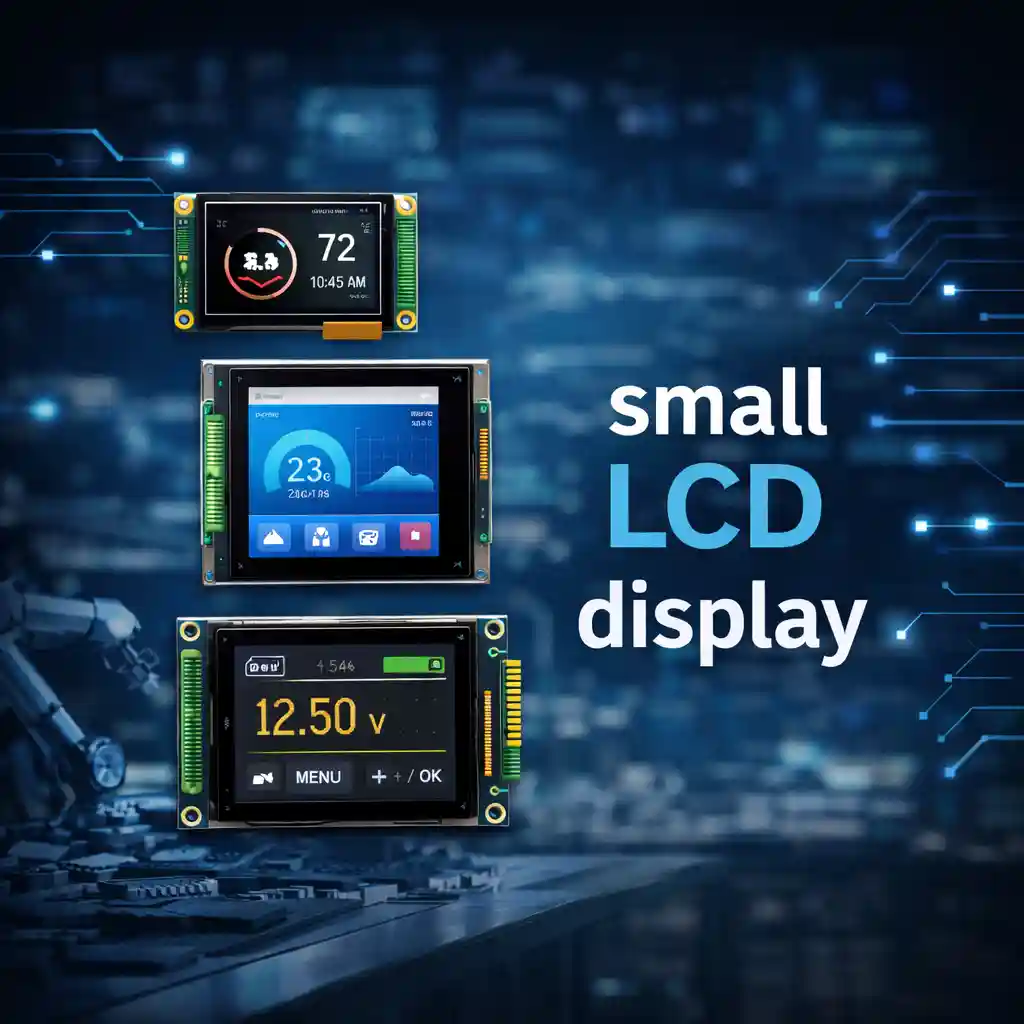
Small LCD display plays a critical role in modern embedded systems. From industrial controllers to handheld instruments, compact display modules provide intuitive visual interfaces that allow users to interact with electronic devices efficiently.
In most cases, a small LCD display refers to display modules in the 1–7 inch range, which is much more common in embedded systems because of their tiny size, low power usage, and the ability to integrate with a variety of other modules. These screens are normally operated on TFT LCD technology and could also offer specifications like IPS viewing angles, high brightness, and capacitive touch screens.
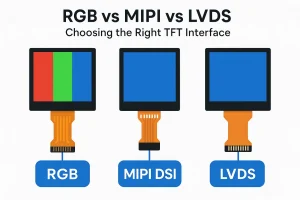
The engineers tend to take into consideration multiple processes when choosing a small TFT display, such as the display size, resolution, brightness, and the type of interface. The interface is one among them, and it dictates the manner in which the display is displayed to the system processor. Interfaces are often available in MCU LCD display, SPI LCD display, RGB LCD display, MIPI DSI display, and LVDS interface display.
This guide explains the most important features, applications and interface options of small LCD displays that would assist engineers to select the appropriate display solution to embedded systems.
What Is a Small LCD Display?
A small LCD display is normally a TFT LCD module with a diagonal measure of 1 inch to 7 inches, as is frequently found in smaller electronic and embedded equipment.
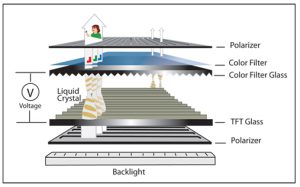
The majority of small LCD modules in the modern world employ the TFT ( Thin Film Transistor ) technology, which has superior color capabilities, improved contrast, and response times than the older passive matrix displays. This renders them applicable to the graphical user interfaces and interactive control panels.
Depending on the application requirements, small LCD displays may include several enhanced features:
-
IPS wide viewing angles for improved visibility from different directions
-
High brightness options for outdoor or high-ambient-light environments
-
Capacitive or resistive touchscreens for user interaction
-
Multiple interface options for compatibility with various processors and microcontrollers
Popular Small LCD Display Sizes and Applications
Small LCD displays come in various sizes which gives the engineers the option of selecting the best screen to fit in their device design. Although the specific size will be determined by the application, a variety of size ranges are very often used in embedded systems.
1–2 inch LCD displays
The 1-2 inch displays are normally applied in small handheld gadgets and portable electronics where the amount of space is minimal. These screens are commonly combined with either SPI or MCU interfaces and can be used in simple graphical interfaces or status displays.
3–5 inch LCD displays
The 3–5 inch range is one of the most widely used sizes for embedded systems. These displays provide a good balance between screen area and system integration, making them suitable for industrial controllers, portable instruments, and smart devices. Resolutions are usually higher, and interfaces such as RGB or SPI are commonly used.
6–7 inch LCD displays
The 6-7 inch displays have better graphics display and larger screens. They are not only used in industry HMI panels, control systems and smart terminals, but also more information is required to be shown. The choice of display size will be determined by the available space of the device, the desired resolution and the processing power of the system.
Common Applications of Small LCD Display
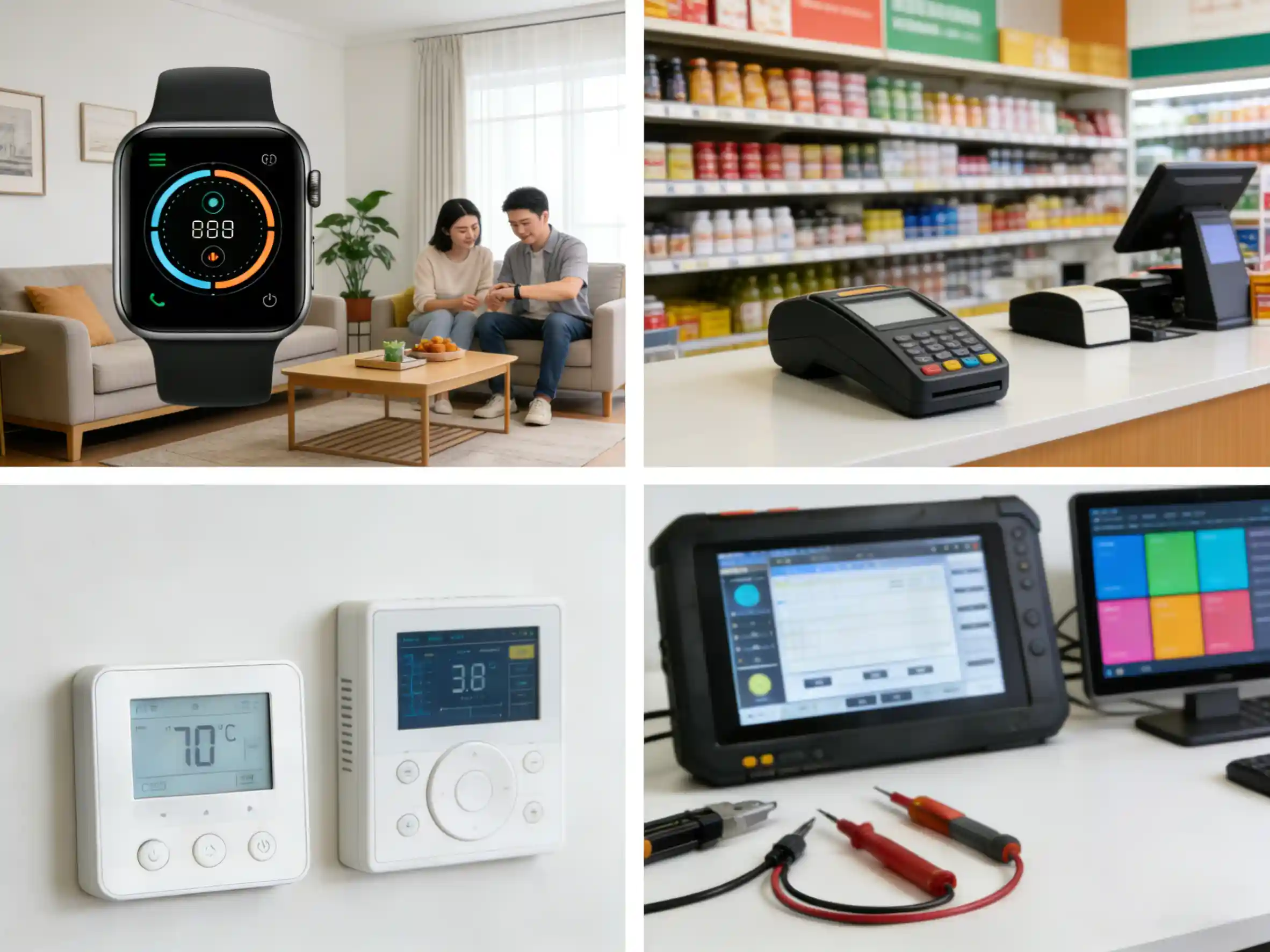
Small LCD displays are also popular with industrial products, medical devices, handheld instruments, smart home systems, and IoT products, which need compact graphical user interfaces due to their small size, low power consumption, and flexibility in integration.
| Application | |
|---|---|
| Industrial control systems | Display operating parameters, equipment status, and control interfaces in industrial panels and HMI systems |
| Medical instruments | Show patient data, device settings, and diagnostic information in portable medical equipment |
| Smart home devices | Provide user interfaces for thermostats, control panels, and smart appliances |
| Handheld test equipment | Display measurement results and menu interfaces in portable tools such as multimeters |
| IoT devices and embedded electronics | Provide visual feedback for device status, monitoring, and configuration |
Key Specifications When Choosing a Small LCD Display
When integrating a small LCD display into an embedded system, several technical parameters should be carefully considered.
Display Resolution
Increased resolution gives enhanced graphics and enhanced user interface design but needs more processing power and also bandwidth.
Viewing Angle
IPS-based displays have much larger viewing angles than traditional TN displays, and are appropriate in devices that are used in various orientations.
Brightness
Brightness in display is essential in visibility. Devices in the indoors can need approximately 250-400 nits and outdoor settings can need 800 nits and above.
Touchscreen Options
A great number of small LCD displays are available with touchscreen:
-
Capacitive touchscreens (PCAP) for modern user interfaces
-
Resistive touchscreens for industrial environments or glove operation
Interface Compatibility
The display interface defines the way the LCD interacts with the system processor and has an impact on performance, complexity of development and hardware design.
Interface Options for Small LCD Display
Common interfaces include MCU (CPU), SPI, RGB, MIPI DSI, and LVDS, each offering different characteristics in terms of bandwidth, pin count, and system complexity.
Comparison of Small LCD Display Interfaces
| Interface | Type | Bandwidth | Pin Count | Typical Use |
|---|---|---|---|---|
| MCU (CPU) | Parallel | Medium | Medium | Microcontroller systems |
| SPI | Serial | Low | Very Low | Compact embedded devices |
| RGB | Parallel | High | High | Systems with LCD controller |
| MIPI DSI | Serial | Very High | Low | High-performance processors |
| LVDS | Differential | Very High | Medium | Higher-resolution displays |
This table provides a quick overview of common interface options used with small LCD display. The following sections explain each interface in more detail.
MCU LCD Display
An MCU LCD display uses a parallel MCU/CPU interface, typically based on the 8080 or 6800 communication protocol. In this architecture, the microcontroller sends commands and pixel data directly to the LCD controller.
Key features include:
-
Parallel data bus (commonly 8-bit or 16-bit)
-
Separate command and data signals
-
Wide compatibility with microcontrollers
MCU interfaces display can be found in the embedded systems based on microcontroller devices, particularly low to medium resolution small LCD displays.
SPI LCD Display
An SPI LCD display uses the Serial Peripheral Interface, which is widely supported by most microcontrollers.
Because SPI transmits data serially, it requires very few signal pins, making it ideal for compact hardware designs.
Typical characteristics include:
-
Very low pin count
-
Simple hardware integration
-
Suitable for small displays and simple graphics
Due to its limited bandwidth, SPI is generally used for smaller LCD modules or applications with modest refresh requirements.
RGB LCD Display
An RGB LCD display uses a parallel RGB interface, where pixel data is transmitted continuously from the processor to the display.
This interface is commonly supported by processors with a built-in LCD controller.
Key characteristics include:
-
Higher bandwidth than MCU or SPI interfaces
-
Continuous pixel data transmission
-
Suitable for higher resolution displays
RGB interfaces are widely used in industrial HMI systems and embedded devices requiring smooth graphics performance.
MIPI DSI Display
MIPI DSI (Mobile Industry Processor Interface – Display Serial Interface) is a high-speed serial interface widely used in modern embedded processors and mobile devices.
It is based on high-speed differential signaling enabling high data bandwidth with less required pins.
Key advantages include:
-
High data transfer speed
-
Support for high-resolution displays
-
Lower pin count compared with RGB interfaces
MIPI DSI is commonly used in advanced embedded systems and high-performance processors.
LVDS LCD Display
LVDS (Low-Voltage Differential Signaling) is a high-speed differential interface designed for reliable data transmission.
It has a high noise resistance and constant signal transmission and can be used in an upgraded resolution display.
Typical characteristics include:
-
High data transmission speed
-
Good signal integrity over longer distances
-
Often used for larger or higher-resolution LCD panels
LVDS can also be used in certain high-resolution small LCD display applications.
Conclusion
Small LCD displays between 1 and 7 inches are widely used in embedded systems thanks to their compact size, flexible integration, and broad interface support. These displays can be found in applications ranging from industrial control equipment to smart home devices and portable electronics.
Choosing a small LCD display, the engineers ought to consider display specifications, system architecture and interface compatibility. Interfaces like MCU, SPI, RGB and MIPI DSI are each provided with varying benefits basing on the processor and performance needs.
With the correct selection of display size, specifications, and interface, developers are able to develop stable and efficient embedded systems that have friendly visual interfaces.