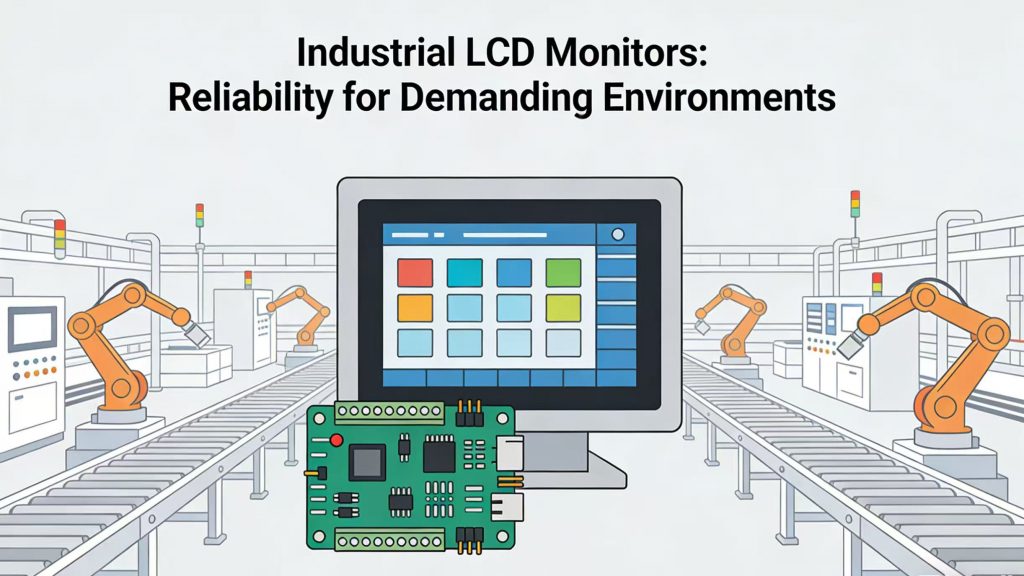
In modern industrial environments, equipment must operate reliably under demanding conditions such as heat, dust, vibration, and continuous use. In practice, many systems run 24/7, where consumer-grade displays often struggle to maintain stable performance over time.
This is why Industrial LCD Monitors are widely used in industrial systems. Designed for durability and long service life, they can withstand harsher conditions and extended operating cycles compared to standard displays.
At the same time, industries—from factory automation to EV charging—require efficient interfaces for monitoring and control. As a result, a reliable Industrial Display for Equipment has become a key component, enabling operators to manage systems more effectively.
Industrial LCD Monitors: What Makes Them Different from Consumer Displays
To address the challenges of industrial environments, manufacturers rely on specialized Industrial LCD Monitors designed for long-term reliability. In many systems, displays are expected to operate continuously for years, which requires careful attention to component selection, thermal management, and overall product lifecycle.
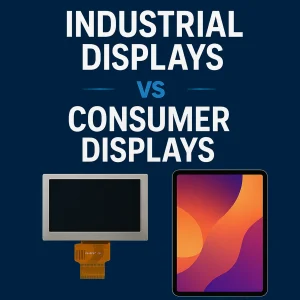
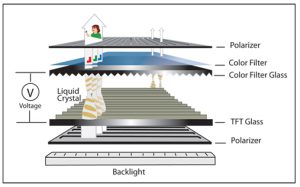
Unlike consumer monitors that focus on cost and occasional use, industrial displays follow a different design approach. Greater emphasis is placed on reliability engineering, ensuring that key components—such as the LCD panel, backlight, and controller board—can maintain stable performance under continuous operation and changing environmental conditions.
Product lifecycle is also critical. Industrial equipment often remains in use for many years, so displays must offer long-term availability and durability. As a result, Industrial LCD Monitors are commonly rated for 50,000 hours or more, making them suitable for applications where downtime must be minimized.
Below is a simplified comparison:
| Feature | Consumer Monitor | Industrial LCD Monitor |
|---|---|---|
| Operating Temperature | 0–35°C | -20°C to 70°C |
| Brightness | 250–350 nits | 700–1500 nits |
| Lifespan | ~20,000 hours | 50,000+ hours |
| Usage Pattern | Intermittent | 24/7 Operation |
| Durability | Low | High |
Visibility is another key consideration. In many real-world applications, displays are used outdoors or under strong lighting conditions, where glare and reflections can reduce readability.
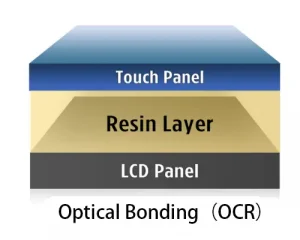
For this reason, high-brightness Industrial LCD Monitors, typically around 1000 nits or higher, are widely used. In some cases, technologies such as anti-glare coatings or optical bonding are added to further improve visibility. These features ensure that the display remains clear and usable across a wide range of environments.
Custom Industrial LCD Monitors for Specialized Equipment
While standard industrial monitors can satisfy many general requirements, specialized equipment often demands a much higher level of customization to operate efficiently and safely.
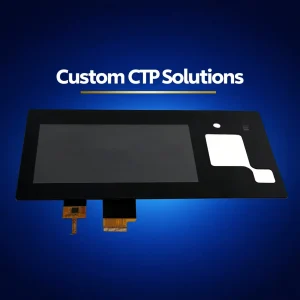
This is where Custom Industrial LCD Monitors become indispensable. In practice, equipment manufacturers frequently encounter scenarios where off-the-shelf displays simply cannot meet specific operational or mechanical needs. These requirements may include unusual display dimensions to fit into uniquely shaped control panels, specialized interface protocols to communicate with embedded systems, or ruggedized construction to withstand harsh environmental conditions.
By offering tailored solutions, custom industrial displays ensure that each piece of equipment can maintain both functionality and reliability in demanding situations.
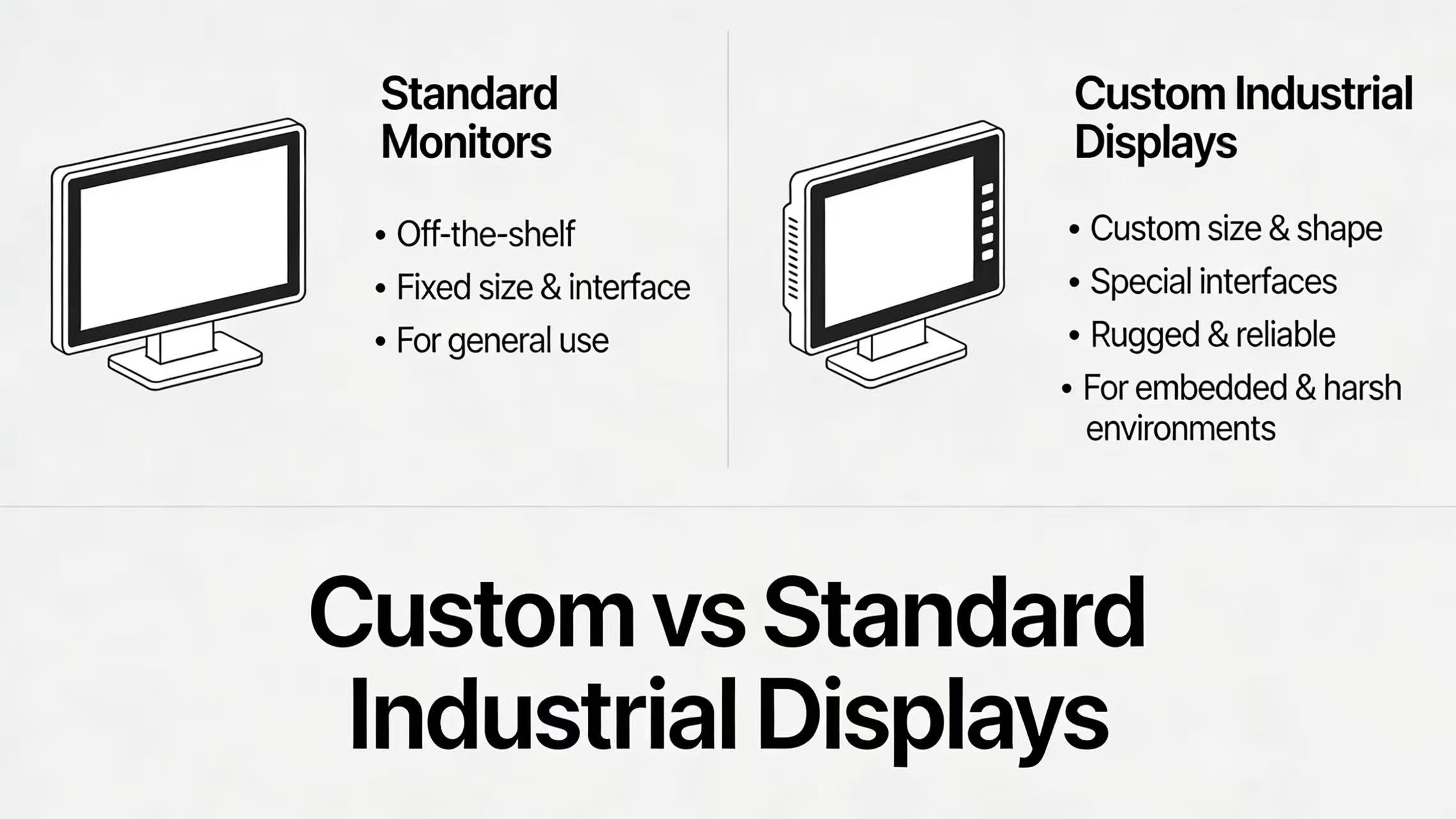
For example, a manufacturer of automated production machinery may require a display with a non-standard aspect ratio to fit seamlessly into a densely packed control console. In other cases, devices like EV charging stations or outdoor kiosks may need additional interfaces—such as HDMI, LVDS, or USB—to connect with embedded computing systems, sensors, or peripheral modules.
Moreover, displays installed outdoors often demand enhanced brightness levels, sometimes exceeding 1000 nits, to remain readable under direct sunlight. Weather protection, dust resistance, and impact-rated cover glass (such as IK07 or IK10) may also be essential to ensure long-term durability. In many real industrial installations, combining these custom features allows operators to interact with equipment safely and efficiently, while maintaining system performance and uptime.
Customization options commonly requested by equipment manufacturers include:
| Custom Feature | Purpose |
|---|---|
| High Brightness (1000+ nits) | Outdoor visibility |
| Optical Bonding | Reduced reflection |
| IK-rated Cover Glass | Impact protection |
| Custom Interfaces | System integration |
| Wide Temperature Design | Harsh environments |
Because each machine has different requirements, Custom Industrial LCD Monitors allow manufacturers to build a tailored Industrial Display for Equipment that integrates seamlessly with their systems.
Industrial Display Solutions: Key Components and Technologies
Modern Industrial Display Solutions bring together multiple technologies to ensure stable performance and reliable interaction between humans and machines. In many real-world industrial projects, the display is no longer just an output device. It acts as a central interface that connects the control system, embedded hardware, and the end user. Whether it is used in a factory control panel or a self-service terminal, the display plays a key role in how operators interact with the entire system.
A typical industrial display system is built from several core components, each serving a specific function within the overall solution:
| Component | Function |
|---|---|
| LCD Panel | Displays visual content |
| Controller Board | Processes display signals and ensures compatibility |
| Touch Module | Enables user interaction |
| Cover Glass | Protects the display surface and improves durability |
In practice, all components in Industrial Display Solutions must work together seamlessly. The LCD panel defines image quality and brightness, while the cover glass provides protection and can improve usability through anti-glare or anti-reflective treatments. In some applications, optical bonding is also used to enhance visibility and structural strength.
The controller board plays a critical role as the bridge between the display and the system’s computing platform. In many cases, displays are connected to embedded systems or SBCs running Linux or Android, where signal compatibility and long-term stability are essential. Even minor inconsistencies in signal processing can affect overall performance, so controller design is often tailored to specific applications.
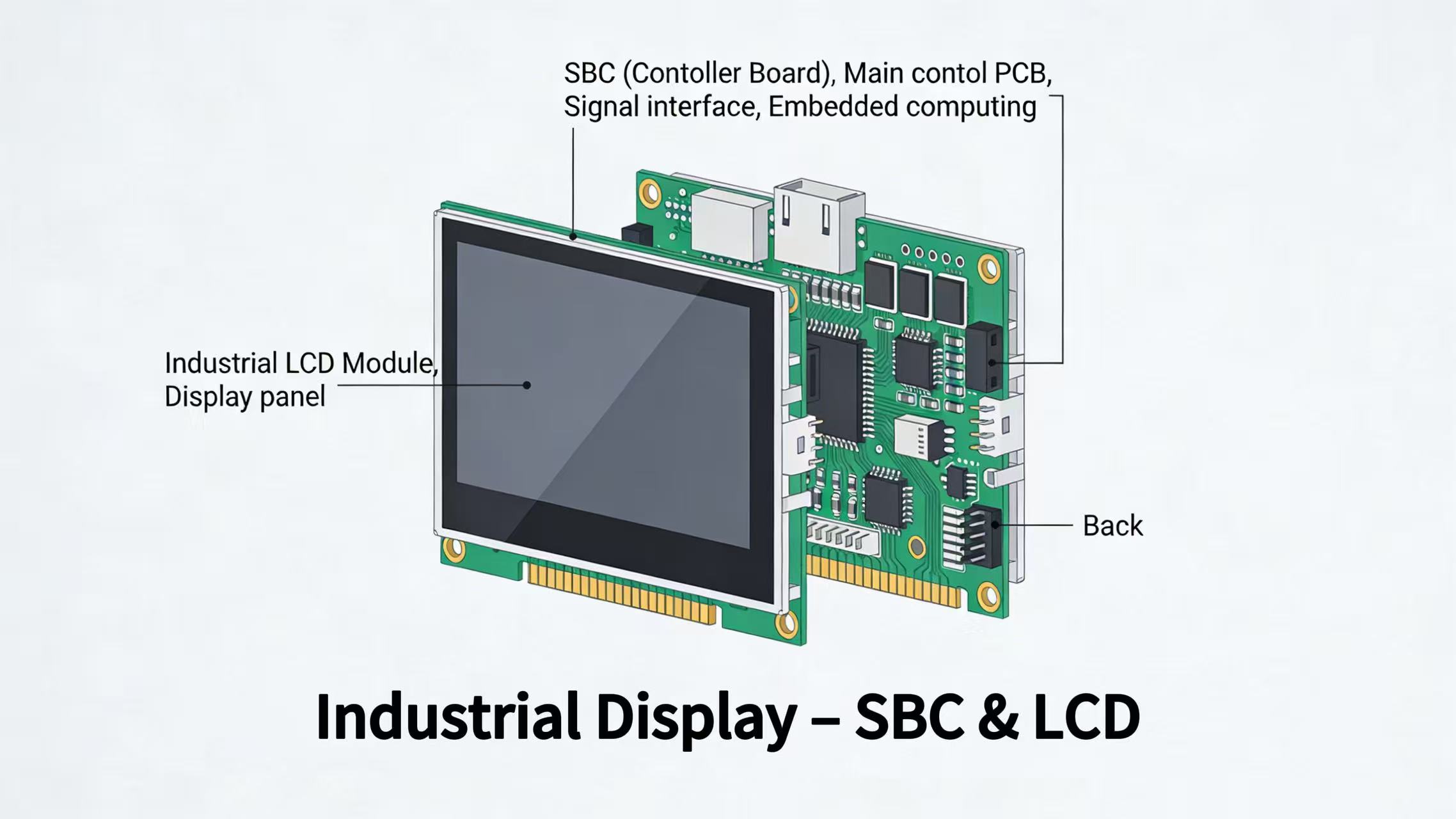
Another key element is the integration of the Industrial Touch Monitor interface. As physical buttons are increasingly replaced by touch controls, operators rely on responsive and durable touch interaction for configuration and monitoring. These systems must perform reliably even in environments involving gloves, moisture, or dust.
Overall, an industrial display is not just a screen, but a carefully integrated system designed to ensure reliable operation and consistent user interaction in demanding conditions.
Industrial Touch Monitor: Enhancing Equipment Interaction
User interaction is a key part of any industrial system. In many cases, the display serves as the main interface between the operator and the machine, whether for monitoring status, adjusting parameters, or handling alerts. This is where the Industrial Touch Monitor becomes essential, especially in systems where efficiency and accuracy matter.
In practice, industrial environments place higher demands on touch interfaces. Factors such as gloves, dust, moisture, and oil can affect usability, so selecting the right technology directly impacts how reliably operators can interact with equipment.
Two main touch technologies are commonly used:
| Touch Technology | Advantages | Typical Applications |
|---|---|---|
| PCAP (Projected Capacitive) | Multi-touch, high sensitivity | Control panels, kiosks |
| Resistive Touch | Works with gloves | Harsh industrial environments |
PCAP touch is widely used for its responsiveness and support for multi-touch, making it suitable for modern control interfaces. In contrast, resistive touch is often preferred in harsher environments, where operators wear gloves and reliability is more important than interface complexity.
Environmental conditions also play an important role. In outdoor or semi-outdoor applications, displays may be exposed to rain, dust, or condensation. To ensure stable operation, Industrial Touch Monitors are designed to perform reliably even under these conditions.
In practice, the choice of touch technology depends on a balance of usability, environment, and long-term reliability, ensuring consistent and efficient interaction in real-world applications.
Industrial Display for Equipment: Real-World Applications
Today, the demand for reliable Industrial Display for Equipment continues to grow across many industries. In many real projects, the display serves as the primary interface between the machine and its operator.
One common example is EV charging stations. These systems rely on high-brightness displays so users can read instructions under direct sunlight. In such installations, Industrial LCD Monitors with optical bonding and anti-glare coatings significantly improve visibility.
Another major application is factory automation. Production lines often use industrial displays as human-machine interfaces (HMI). Operators rely on these displays to monitor equipment status, manage production parameters, and detect potential issues.
Other typical applications include:
-
Medical equipment interfaces
-
Transportation terminals
-
Self-service kiosks
-
Industrial control systems
Across all these applications, the reliability of Industrial LCD Monitors directly affects equipment usability and operational efficiency.
Conclusion
As industrial systems become more advanced, the role of display technology continues to expand. Reliable Industrial LCD Monitors are no longer just optional accessories—they are essential components that support machine operation, monitoring, and user interaction.
In many specialized applications, standard displays simply cannot meet the required performance standards. This is why Custom Industrial LCD Monitors are increasingly used to address unique design requirements such as brightness, durability, and system integration.
Looking ahead, the demand for advanced Industrial Display Solutions will continue to grow as industries adopt smarter equipment and more interactive control systems. By combining robust hardware with tailored customization, industrial displays will remain a key part of modern machine design.