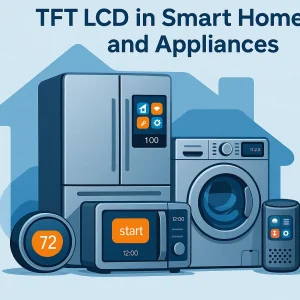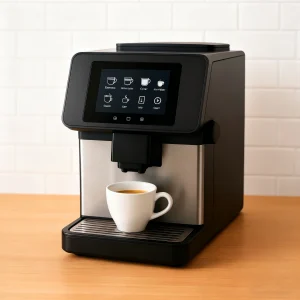
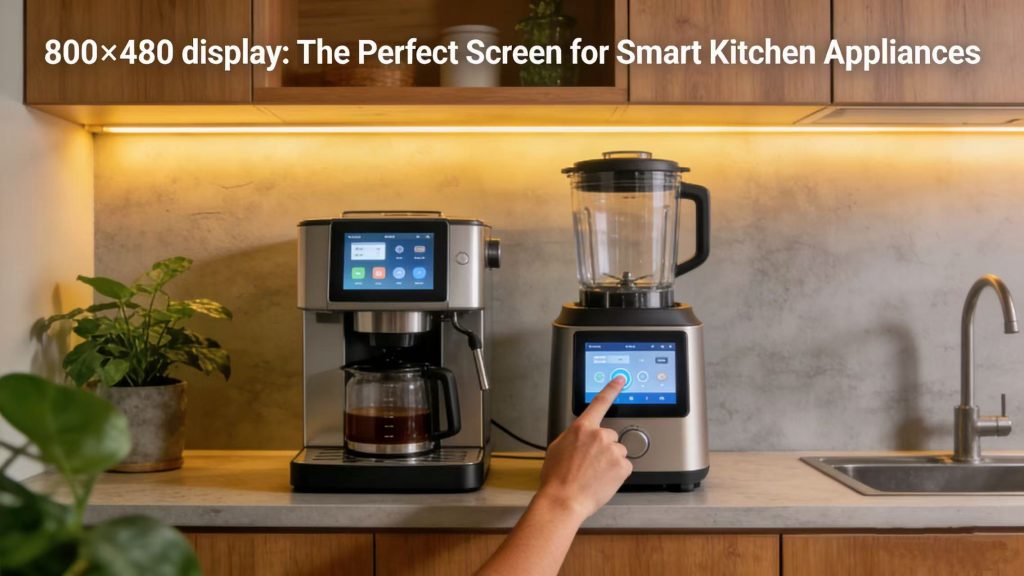
Our kitchens are getting smarter. Coffee machines now brew to our personal taste, and dispensers tailor our daily nutrition. But with all this customization, one thing has become clear: we need displays that can keep up. Enter the 800×480 display. It’s quickly becoming the go-to screen for these high-tech appliances, striking just the right balance between pin-sharp clarity and a shape that fits almost anywhere.
So, why is this particular format winning over designers? In this post, we’ll break down the technical perks that make it the perfect link between complex technology and a seamless, intuitive experience in your home.
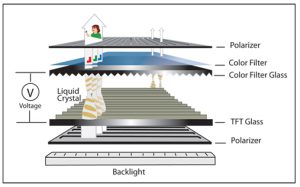
Why IPS Screens Dominate in Kitchen Displays
Kitchens are dynamic spaces. We rarely look at our appliances straight-on. You might be glancing at your coffee machine from the dining table, or quickly checking a nutrition dispenser’s screen with a sidelong look while your hands are busy elsewhere.
That’s why exceptional viewing performance isn’t just a bonus—it’s essential. This is the core strength of an IPS display. It’s built precisely for environments where the viewing angle is constantly shifting. While older screen types can distort, darken, or lose color when seen from the side, IPS technology keeps the image consistently clear and vivid.
Now, take that IPS advantage and apply it to a 800×480 display. What you get is an interface that holds up perfectly from any spot in the room. Fussy menus, fine icons, and small text don’t just survive these off-angle glances—they remain perfectly legible. The high resolution delivers the pixel density that makes every element on screen truly sharp and visually engaging.
The final result? An appliance that communicates effortlessly. It becomes more intuitive to use, which directly enhances the user experience. At the same time, this clarity and consistency are key to supporting a clean, premium aesthetic in a modern kitchen. For manufacturers looking to integrate a top-tier appliance display, this combination of technologies is often the foundation. This is where the expertise in providing industrial TFT LCD solutions and truly customized displays becomes critical, ensuring the hardware not only meets spec but feels seamless in its final application.
800×480 Display: An Industrial-Grade Choice for the Kitchen
Don’t let the cozy feel fool you—the kitchen is a surprisingly tough place for electronics. Components there have to withstand sudden temperature shifts from a hot oven, constant exposure to steam and spills, and the demand for flawless performance through years of daily use.
Your average consumer screen simply isn’t cut out for these conditions. That’s why, for any appliance meant to last, specifying an industrial TFT LCD isn’t just an option—it’s a fundamental design requirement.
So what does “industrial” actually get you? For starters, extended reliability. These aren’t just off-the-shelf panels. They’re built with higher-grade components and robust processes focused on long-term stability, where cutting corners isn’t part of the equation.
Then there’s the wide operating temperature range. A genuine industrial-grade display works perfectly whether it’s mounted in a cool pantry or right next to a steaming stovetop, delivering consistent performance through every season.
Choosing to integrate an industrial TFT LCD is a direct investment in a product’s lifespan. For manufacturers, it’s a strategic move that safeguards their brand reputation by preventing failures that never should have happened.
Customization: Your Key to Truly Uncompromised Design
Truly innovative appliances are meant to break the mold—so why let a ready-made display hold you back? A standard screen can box you in with awkward connector placements, less-than-ideal dimensions, or a look that just doesn’t feel special.
That’s where customized displays come in. Think of today’s display modules not as finished parts, but as flexible platforms. They’re made to be tailored, so the screen doesn’t just show information—it becomes a natural, seamless extension of your product’s identity.
Here’s how key customization options can reshape both what your display does and how it looks:
-
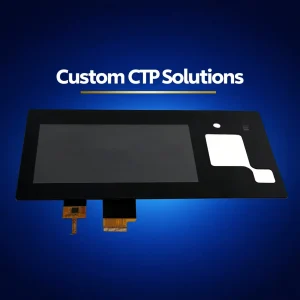
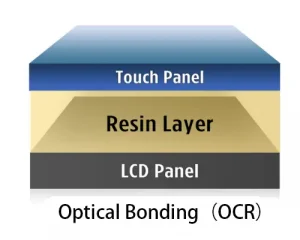
Integrated Touch: Pairing the display with a robust capacitive touch panel (CTP) and using optical bonding eliminates the air gap. The result is a sleek, completely flat surface that wipes clean easily and stands up to kitchen moisture without a seam in sight.
-
Adapted Connectivity: Even the FPC (Flexible Printed Circuit)—the display’s lifeline—can be tailored. Its length, shape, and connector type can all be customized to simplify assembly and fit neatly into your device’s unique internal layout.
-
Branded Aesthetics: The cover glass is your canvas. Its shape, thickness, and finish can be specified to your exact needs. Go a step further with silk-printing a subtle logo or designing a custom border—details that make the display feel purpose-built for your appliance’s design language.
The Transformative Role of the Appliance Display
A display’s true value isn’t found on a spec sheet—it’s realized in how it’s used. A truly advanced appliance display transcends mere information delivery; it fundamentally changes how people interact with and feel about the device itself.
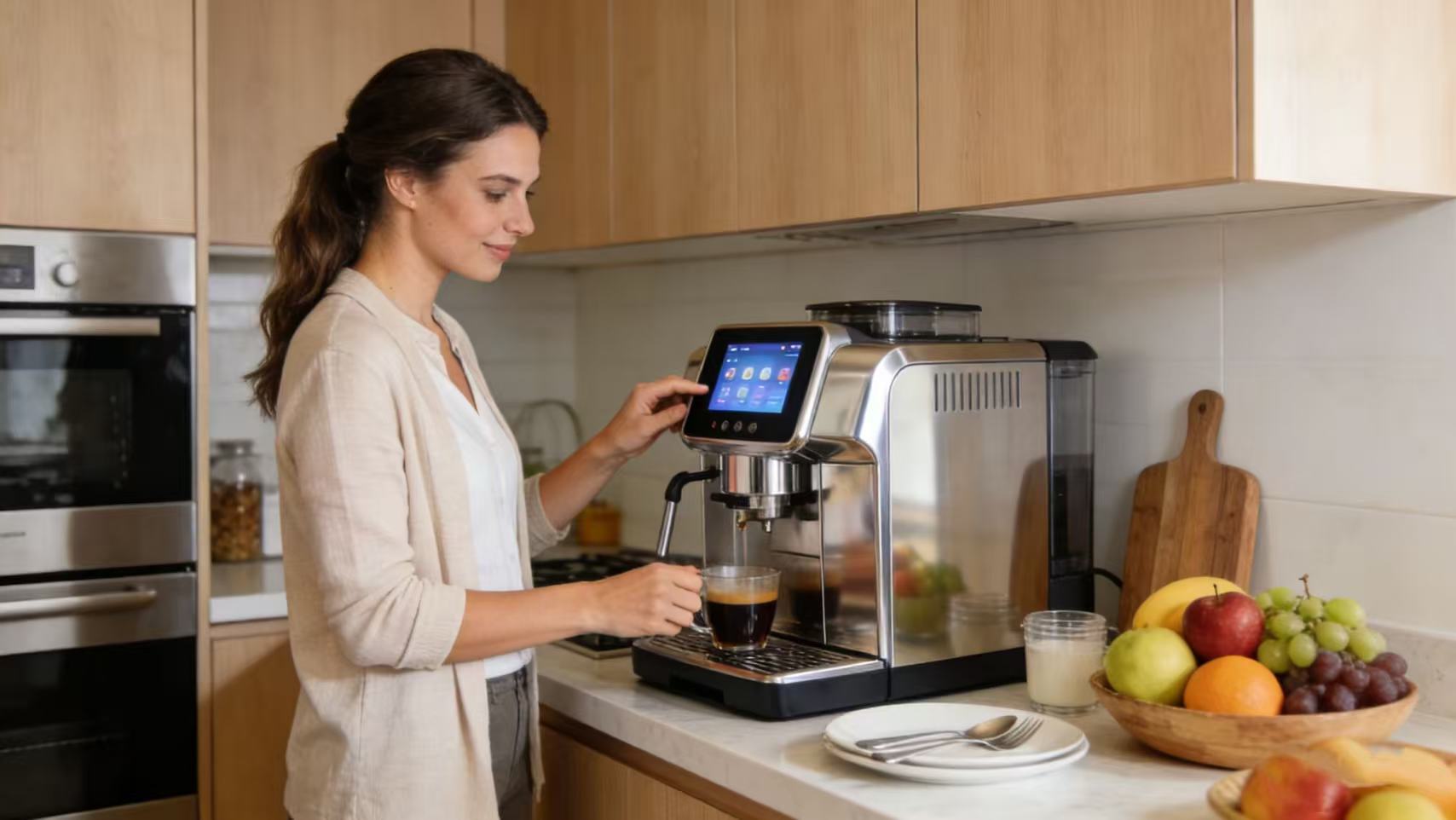
Take a high-end coffee machine. Here, the 800×480 display transforms into a personal barista. It doesn’t just list settings; it guides you with smooth animations for grind size and brew time. It can unveil the once-hidden art of coffee-making by rendering real-time pressure and temperature curves right on the screen, bringing professional-level insight into the home kitchen.
In a personalized nutrition dispenser, the interface plays a more subtle but critical role: it builds trust. It clearly shows your key health metrics, briefly explains the purpose behind each daily blend, and offers a visual confirmation as ingredients are mixed. This transparency turns a potentially complex health routine into a simple, reassuring daily ritual.
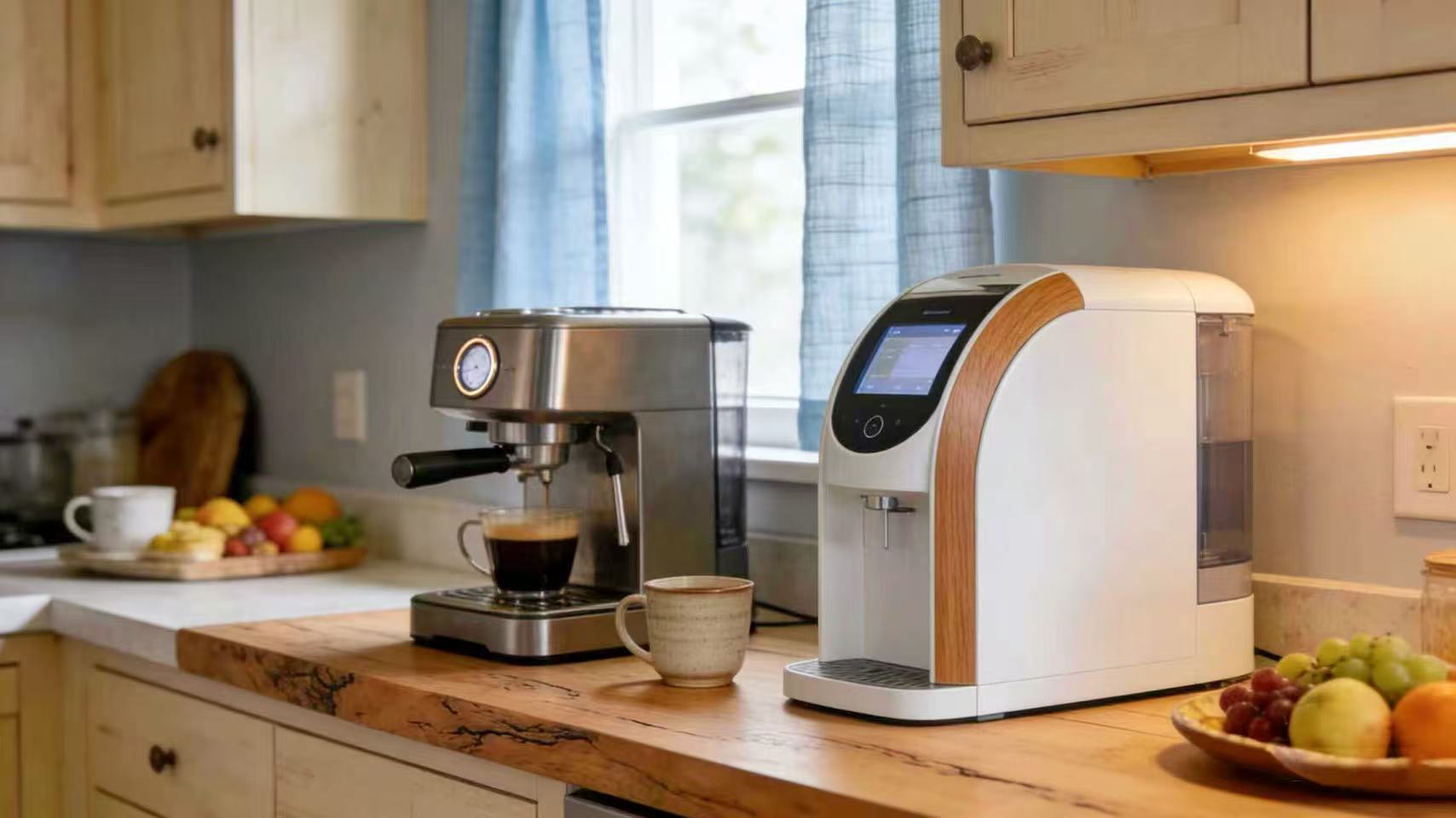
For precision culinary tools like sous-vide circulators, where a fraction of a degree matters, reliability is everything. The display must plot a rock-steady temperature curve over many hours without glitches or fading. This is where the rugged build and unwavering performance of an industrial-grade screen prove indispensable, guaranteeing that this vital data is presented accurately and clearly, even in the warm, humid air near a cooking station.
Conclusion: The Interface as a Strategic Advantage
Choosing the right display for a smart appliance isn’t just a technical box to tick—it’s a foundational choice that shapes the entire product. It has a direct hand in whether users love it, how long it lasts, and ultimately, how they see your brand.
That’s why a 800×480 display that brings together the wide-angle clarity of IPS technology, the rugged reliability of an industrial TFT LCD, and the flexible potential of customization stands out as a comprehensive solution. You get the visual sharpness needed for stunning graphics, the toughness required for daily kitchen life, and the freedom to design something truly unique.
For manufacturers who want to define the next generation of connected kitchens, this combination is more than just a part you source. It’s the essential canvas—the foundation upon which you can build outstanding, durable, and truly engaging experiences for the user.